Campuskaart-toepassingen: Toegang, Betalingen, Bibliotheek & Mensa
Alle belangrijke toepassingen van RFID-campuskaarten — toegangscontrole, maaltijdplannen, bibliotheek, wasserij, printen, parkeren, openbaar vervoer en evenementen. Infrastructuur en ROI.
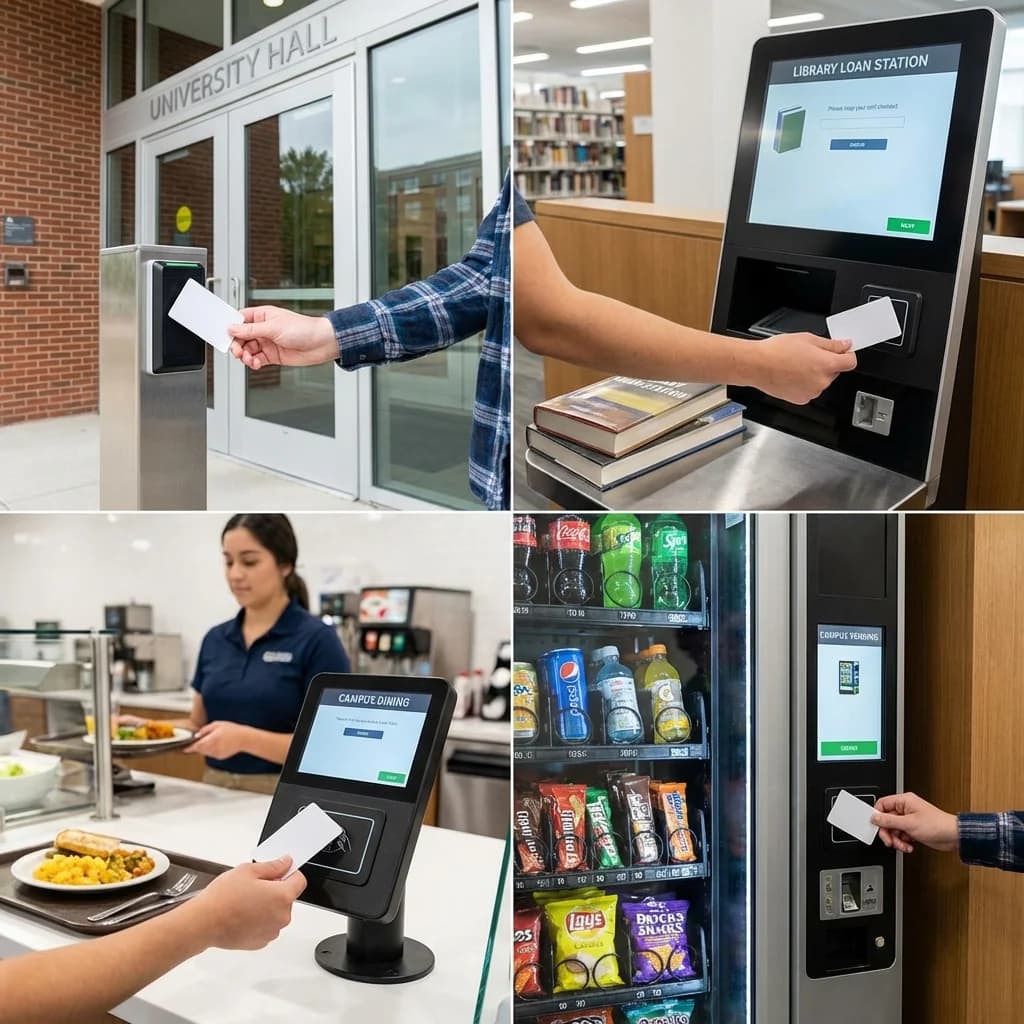
De moderne campuskaart is het Zwitsers zakmes van het universitaire leven. Eén stukje plastic — met een contactloze RFID-chip, een geprinte foto en vaak een magneetstrip voor legacy-compatibiliteit — dient als studentenpas, gebouwsleutel, betaalmiddel, bibliotheekkaart, maaltijdticket, vervoersbewijs, evenementcredential en meer.
1. Gebouwtoegangscontrole
De basale toepassing. Studenten tikken hun kaart bij lezers om gebouwen te betreden. Moderne implementaties gebruiken 13,56MHz-credential met AES-authenticatie of mobiele enterprise-credentials met AES-128-encryptie. Toegang kan worden geregeld op basis van tijd, rol, individu en gebouw/verdieping/kamer.
2. Studentenhuisvesting
Een gespecialiseerde vorm van gebouwtoegang. Draadloze sloten op individuele kamerdeuren (draadloze slotsystemen draadloze slotsystemen) communiceren met het campustoegangscontrolesysteem. Sommige systemen ondersteunen tijdelijke gastcredentials.
3. Maaltijdplannen en Horeca
Campuskaarten beheren de complexe wereld van universitaire horeca — blokplannen met maaltijdbeurten per semester, aflopend saldo, flexdollars, gastmaaltijden en retailtegoeden.
4. Contactloos Betalen en Campuscommerce
5. Bibliotheekdiensten
De campuskaart dient als bibliotheekkaart: uitleenprivileges, reservering van studieruimtes, computertoegang en ophalen van interbibliothecair leenverkeer.
6. Parkeren en Vervoer
Campuskaarten als parkeervergunning, integratie met openbaar vervoer (het Duitse "Semesterticket"-model) en campusfietsdeelsystemen.
7. Aanwezigheidsregistratie
Studenten tikken hun kaart bij een lezer wanneer ze een collegezaal betreden, en het systeem registreert automatisch hun aanwezigheid. Deze data voedt vroegtijdige waarschuwingssystemen.
8. Examenidentificatie
Tijdens examens presenteren studenten hun campuskaart als foto-identificatie — een van de belangrijkste fysieke kaartfuncties die niet door een mobiele credential kan worden vervangen.
9. Evenementen en Toegangscontrole
Sportevenementen, concerten, gastcolleges, carrièrebeurzen — de campuskaart beheert evenementtoegang en verifieert registraties.
10. Sport en Welzijn
Toegang tot de sportfaciliteiten, uitleen van sportmaterialen, inschrijving voor cursussen en gebruiksmonitoring.
De Eén-Kaart Filosofie
De kracht van een campuskaartprogramma ligt in unificatie. Elk van bovenstaande toepassingen zou door een aparte credential bediend kunnen worden. Het eén-kaartmodel vervangt ze allemaal met één credential: vereenvoudigde onboarding, gecentraliseerd beheer, consistente identiteit en kostenefficiëntie.
CampusRFID levert de fysieke basis voor campuskaartprogramma's — hoogwaardige contactloze smartcards vervaardigd naar de specificaties van uw instelling.
*Klaar om te ontdekken wat een campuskaart voor uw universiteit kan doen? Neem contact met ons op om de specifieke toepassingen en kaartvereisten van uw instelling te bespreken.*
Verdiep u in dit onderwerp
Productpagina's geselecteerd voor het onderwerp van deze gids.
Klaar om RFID op uw campus te implementeren?
Neem contact met ons op om te ontdekken hoe onze RFID-oplossingen de campusbeveiliging en studentervaring kunnen verbeteren.
Gerelateerde artikelen
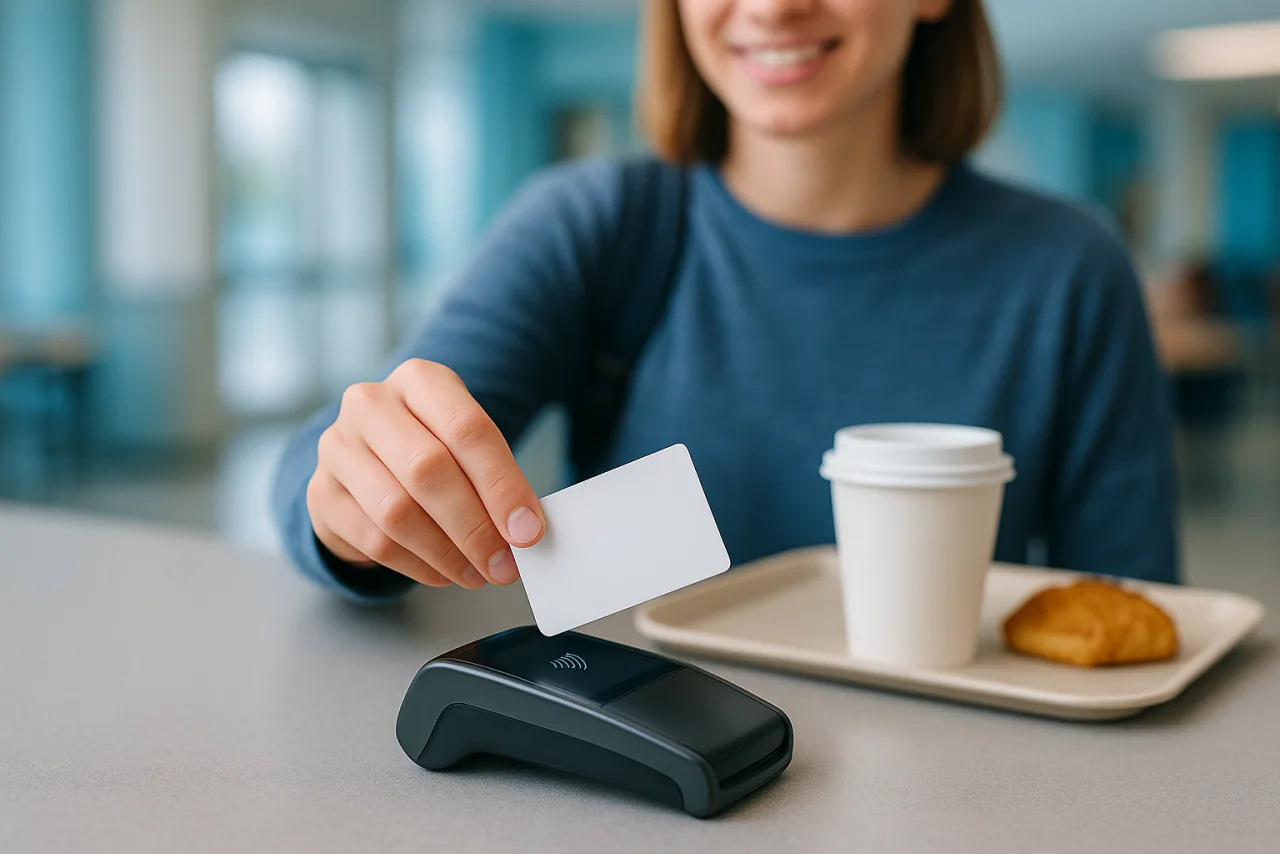
Integratie van campuskaartbetalingen: de koppeling tussen de kaart, kassa, SIS en mobiel bestellen
Een contactloze betaling aan de kassa is het eenvoudige deel. Het complexe aspect — en de factor die het succes van campusbetaalprogramma's bepaalt — is de achterliggende integratie: van kassa's en studenteninformatiesystemen tot accounts met een afnemend saldo, mobiel bestellen en PCI-DSS. Dit is hoe de puzzelstukken werkelijk in elkaar passen.
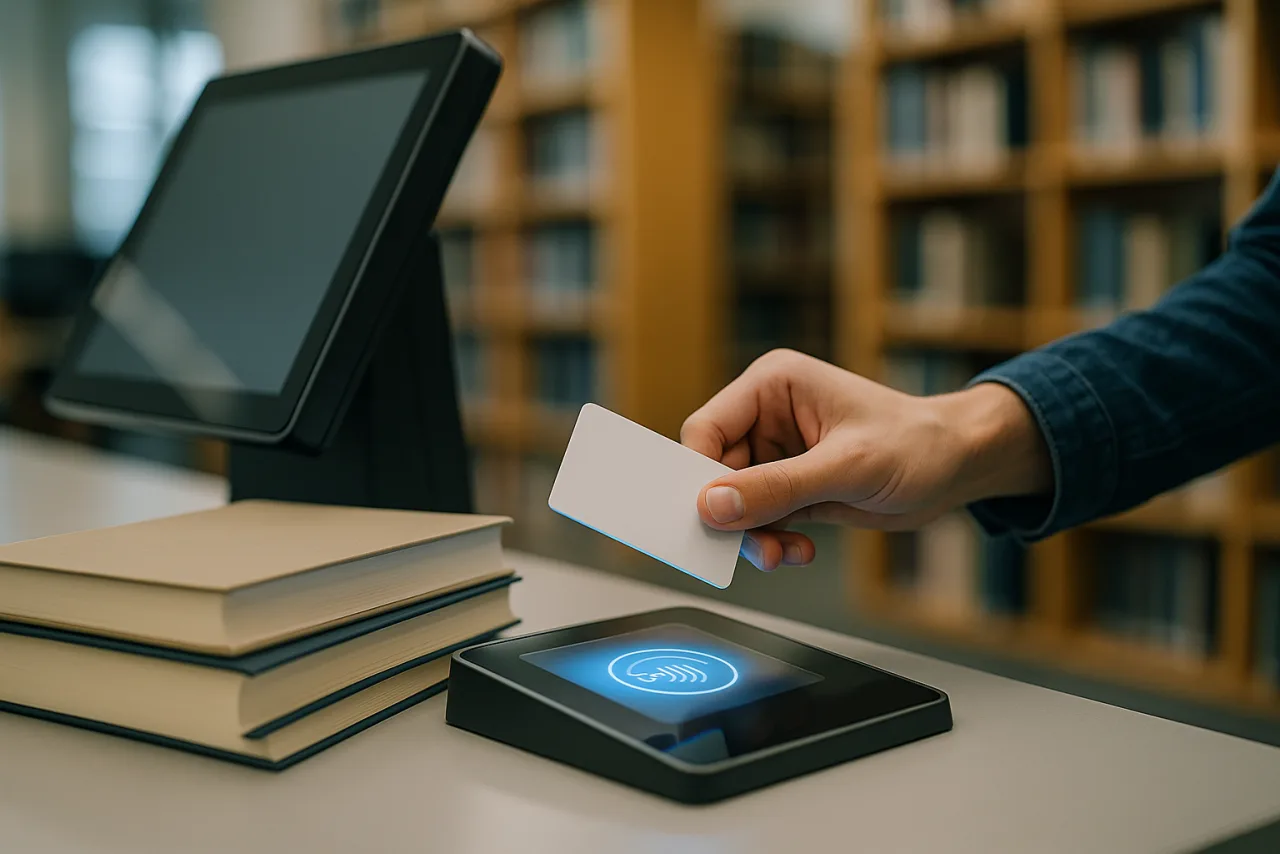
RFID in de academische bibliotheek: zelfbediening, beveiliging en de koppeling met één enkele kaart
Dezelfde studentenpas die toegang geeft tot de campus, leent in enkele seconden een boek uit. Ontdek hoe 13,56 MHz RFID zelfbediening, diefstalbeveiligingspoortjes en realtime inventarisatie in de moderne universiteitsbibliotheek mogelijk maakt — en waarom de slimste implementaties de uitleenadministratie rechtstreeks koppelen aan de campuskaart.