Integratie van campuskaartbetalingen: de koppeling tussen de kaart, kassa, SIS en mobiel bestellen
Een contactloze betaling aan de kassa is het eenvoudige deel. Het complexe aspect — en de factor die het succes van campusbetaalprogramma's bepaalt — is de achterliggende integratie: van kassa's en studenteninformatiesystemen tot accounts met een afnemend saldo, mobiel bestellen en PCI-DSS. Dit is hoe de puzzelstukken werkelijk in elkaar passen.
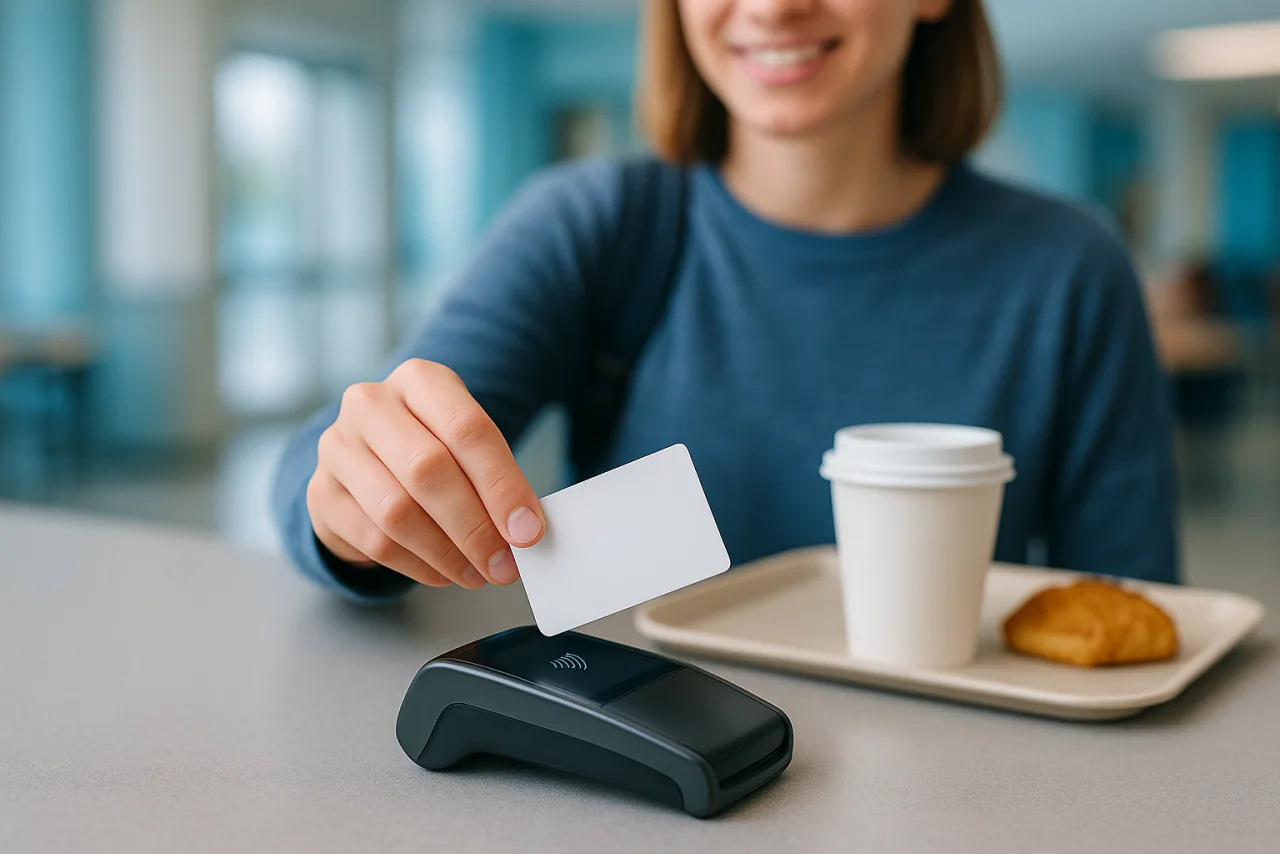
Elk betalingsverhaal op een campus wordt verteld vanuit het perspectief van de student: een kaart aantikken, een maaltijd pakken en binnen een minuut weer buiten staan. Maar dat tikken is de laatste en eenvoudigste stap in een keten die diep binnen de systemen van de instelling begint. Of een betalingsprogramma met campuskaarten naadloos aanvoelt of voortdurend problemen geeft, hangt volledig af van integratie — hoe vloeiend de identificatiedrager verbinding maakt met point-of-sale-terminals, het studenteninformatiesysteem, de rekeningen waarop het geld staat en de mobiele apps die studenten in toenemende mate verwachten. Dit is een gids voor die infrastructuur.
De drie lagen van een campusbetalingsprogramma
Een campusbetalingssysteem bestaat uit drie afzonderlijke lagen. Door hier helder over na te denken, worden de meeste fouten bij de aanschaf voorkomen.
De identificatielaag is de RFID-kaart of de mobiele identificatiedrager zelf — het object dat een student aantikt. De enige taak hiervan is het veilig presenteren van een identificatiekenmerk.
De rekeninglaag is de plek waar het saldo staat. Campusbetalingen werken doorgaans met rekeningen met een afnemend saldo: een student of ouder stort vooraf geld (vaak verdeeld over een maaltijdplan, horecategoed en een algemeen besteedbaar tegoed), en bij elke transactie wordt het saldo gecontroleerd en in realtime afgeschreven. Dit is fundamenteel anders dan een creditcard- of debetkaarttransactie, en het is het belangrijkste voordeel van de campuskaart — gesloten betalingen onder beheer van de instelling, directe deactivering en gedetailleerde rapportages.
De transactielaag is het netwerk van point-of-sale-terminals, verkoopautomaten, wassystemen en deurlezers die een afschrijving van de rekening in gang zetten. Integratie is het werk dat deze drie lagen met elkaar verbindt, zodat ze zich als één systeem gedragen.
Point-of-Sale: De integratie die studenten ervaren
POS-integratie is het meest zichtbare onderdeel. Elke kassa in een bedrijfsrestaurant, café, campuswinkel of foodtruck moet een aangetikte identificatiedrager authenticeren, de rekeninglaag raadplegen voor een autorisatie en de transactie terugboeken — dit alles binnen de seconde of twee dat een student aan de balie wacht. De technische uitdaging is consistentie binnen een omvangrijk en heterogeen landschap: eigen horecagelegenheden, externe franchisehouders, cateringstands bij evenementen en pop-uplocaties moeten allemaal met dezelfde backend van de rekening communiceren.
Instellingen die dit goed aanpakken, eisen open, goed gedocumenteerde interfaces tussen hun platform voor campuskaartbeheer en hun POS-systemen, in plaats van genoegen te nemen met kwetsbare, eenmalige koppelingen. Een open API-benadering betekent dat een nieuw horecaconcept of een nieuwe POS-leverancier kan worden geïntegreerd zonder dat de betalingsstroom opnieuw moet worden ontworpen — en dit is de belangrijkste factor om te bepalen of het programma kan groeien zonder technische schuld op te bouwen.
SIS en ERP: Waar identiteit en geld samenkomen
De campuskaart kan niet los van de basissystemen functioneren. Integratie met het studenteninformatiesysteem (SIS) is wat rekeningen betrouwbaar maakt: inschrijfstatus, maaltijdplanrechten en geschiktheid worden automatisch uitgewisseld, zodat een maaltijdplan wordt geactiveerd wanneer een student zich registreert en wordt gesloten wanneer deze zich uitschrijft — zonder dat een medewerker een spreadsheet hoeft bij te houden. Integratie met het financiële/ERP-systeem van de instelling zorgt voor een correcte aansluiting van de geldstromen: horeca-inkomsten, verplichtingen uit openstaande saldi en interdepartementale overboekingen worden direct in het grootboek geboekt.
Wanneer deze integraties zwak zijn, zijn de symptomen voorspelbaar en hardnekkig — rekeningen die actief blijven nadat een student is vertrokken, maaltijdplannen die aan het begin van het semester niet laden en maandafsluitingen die handmatige tussenkomst vereisen. Wanneer ze sterk zijn, draait het betalingsprogramma in feite vanzelf en worden de gegenereerde gegevens een waardevol operationeel bedrijfsmiddel: realtime inzicht in de vraag naar maaltijden, verkopen per locatie en bestedingspatronen die beslissingen over personeelsbezetting en menu's ondersteunen.
Mobiel bestellen en de bredere definitie van "tikken"
De verwachtingen van studenten reiken inmiddels verder dan de fysieke kassa. Mobiel bestellen — een bestelling plaatsen in een app, betalen met de campusrekening en de wachtrij overslaan bij het afhalen — is een basisservice geworden, en dit stelt nieuwe eisen aan diezelfde rekeninglaag. De app moet de student authenticeren, hetzelfde afnemende saldo controleren, dezelfde regels voor het maaltijdplan toepassen en naar hetzelfde grootboek boeken als een kassa zou doen. In een goed geïntegreerd programma is de mobiele app simpelweg een extra client in de transactielaag die communiceert met dezelfde backend van de rekening; in een slecht geïntegreerd programma wordt het een parallel systeem met eigen saldi en eigen uitdagingen bij de aansluiting.
Hetzelfde principe geldt voor contactloze mobiele identificatiedragers. Wanneer studenten hun campus-ID aan een telefoon toevoegen, moet de betalingsstroom een aangetikte telefoon identiek behandelen als een aangetikte kaart — dezelfde rekening, hetzelfde autorisatiepad, dezelfde rapportage. Om dat te bereiken moeten de identificatielaag en de rekeninglaag strikt gescheiden zijn, zodat het toevoegen van een nieuwe manier van "tikken" niet betekent dat de onderliggende betalingslogica opnieuw moet worden opgebouwd.
Beveiliging en compliance maken deel uit van de architectuur
Een betalingsintegratie is niet compleet zonder vanaf het begin aandacht te besteden aan compliance. Elke gegevensstroom die in aanraking komt met creditcard- of debetkaartgegevens om tegoeden op te waarderen, valt onder PCI-DSS. De meest efficiënte architecturen beperken de reikwijdte hiervan door gegevens van kaarthouders te isoleren — bijvoorbeeld door opwaardeerbetalingen te routeren via een getokeniseerde, gehoste betalingsverwerker, zodat ruwe kaartnummers nooit de systemen van de campus passeren. Gegevens van studentenrekeningen brengen ondertussen FERPA-verplichtingen met zich mee, wat betekent dat toegangscontroles, audit-logging en een zorgvuldige omgang met rapportages die uitgaven aan een identificeerbaar individu koppelen, vereist zijn. Door deze vereisten te behandelen als architectonische randvoorwaarden in plaats van als een overweging achteraf, blijft een programma zowel controleerbaar als veerkrachtig.
Een praktische checklist voor integratie
Voor beheerders die een campusbetalingsprogramma plannen of moderniseren, maken enkele principes het verschil tussen een soepele implementatie en een problematische uitrol. Eis open, gedocumenteerde API's tussen het kaartbeheerplatform en elk POS-, verkoop- en wassysteem, zodat de infrastructuur kan meegroeien. Beschouw SIS- en ERP-integratie als kernvereisten, niet als optionele extra's — zij zorgen ervoor dat rekeningen en aansluitingen betrouwbaar zijn. Ontwerp de rekeninglaag zo dat deze elke transactieclient op identieke wijze bedient, of dat nu een kassa, een verkoopautomaat of een mobiele app is. En integreer PCI- en FERPA-compliance vanaf dag één in de datastromen.
Een betalingsprogramma met campuskaarten is slechts zo goed als de integraties ervan. Het tikken zal er voor de student altijd moeiteloos uitzien — het is de taak van de instelling om ervoor te zorgen dat alles daarachter dat ook is.
Plant u de uitrol van een campusbetalingssysteem of wilt u een bestaand systeem optimaliseren? Neem contact op met ons team om een RFID-betalingsprogramma te ontwerpen dat naadloos integreert met uw POS, studenteninformatiesysteem en mobiele diensten.
Verdiep u in dit onderwerp
Productpagina's geselecteerd voor het onderwerp van deze gids.
Klaar om RFID op uw campus te implementeren?
Neem contact met ons op om te ontdekken hoe onze RFID-oplossingen de campusbeveiliging en studentervaring kunnen verbeteren.
Gerelateerde artikelen
Campus-betaalkaarten: complete gids voor contactloos eten, automaten, wasserij & kaartintegratie
Hoe campus-betaalkaarten werken voor contactloos eten, automaten, wasserij en printen — de grote platforms, POS-integratie, saldorekeningen vs. maaltijdplanboekhouding en wat te specificeren voor een campusbreed betaalprogramma.
Hoe RFID-campuskaarten de Universitaire Horeca Transformeren
Loop een willekeurige universiteitskantine binnen tijdens de drukke lunch en het beeld is herkenbaar: honderden studenten stromen door de deuren, tikken kaarten of telefoons aan bij betaalterminals, pakken hun maaltijd en vertrekken — vaak in minder dan 30 seconden. Achter deze naadloze ervaring schuilt RFID-technologie,...