RFID Attendance Tracking for Universities: Complete Implementation Guide
RFID-based attendance tracking eliminates manual roll calls and buddy punching while giving universities real-time insight into lecture attendance patterns. This comprehensive guide covers the technology, integration with learning management systems, and GDPR considerations for European institutions.
How this guide is reviewed
CampusRFID reviews technical guides against standards and official documentation. Where a source list appears, it identifies the primary references used. Card and reader compatibility should still be verified with a sample on the institution's installed system.
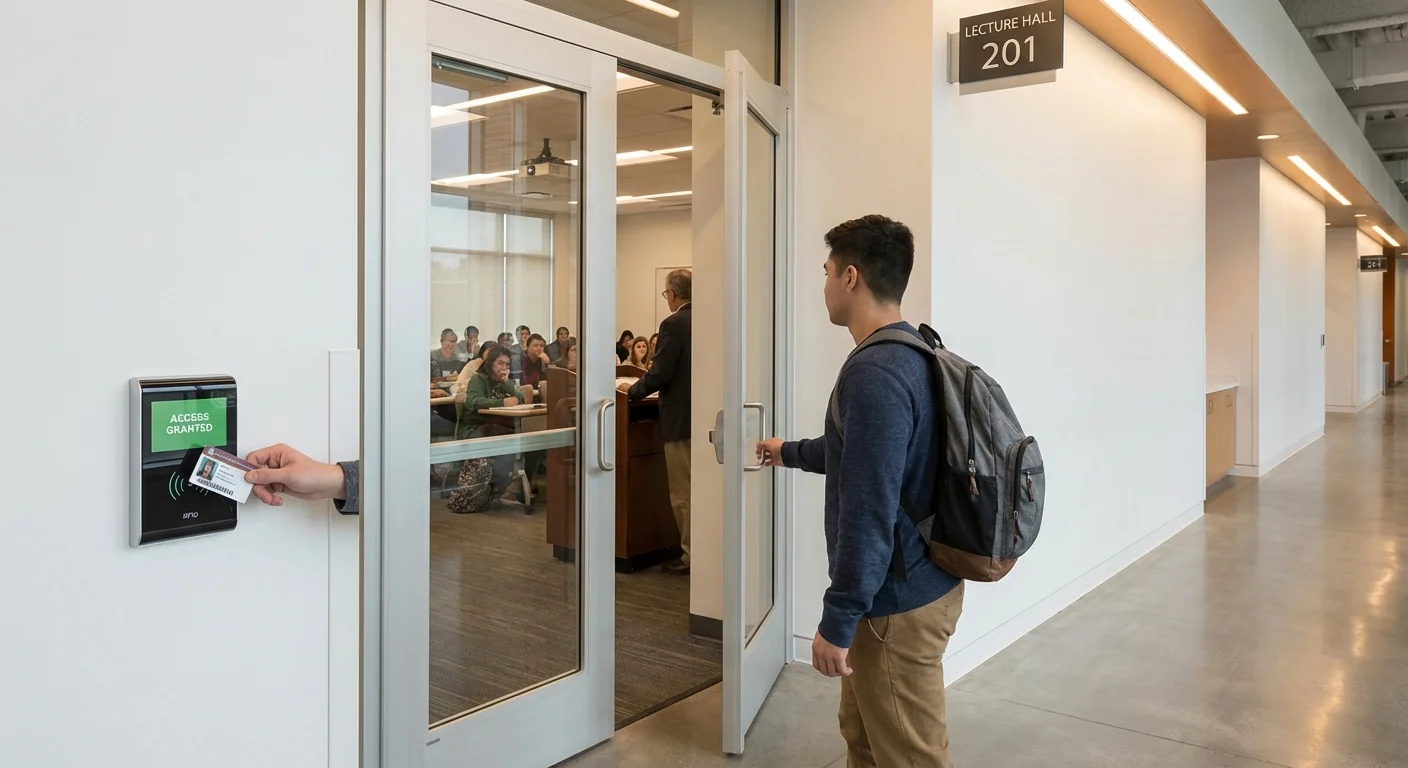
Manual attendance tracking in university lectures is a relic of a pre-digital era. A professor calling out names from a roster in a 300-seat lecture hall wastes 5-10 minutes per session. Paper sign-in sheets get passed around, are easily forged, and take administrative staff hours to digitize. The result: unreliable data, wasted instructional time, and no real-time visibility into attendance patterns that could identify struggling students before they fail.
RFID-based attendance tracking solves these problems by allowing students to register their presence with a simple tap of their campus card on a reader installed at the classroom entrance. The process takes under two seconds per student and generates accurate, timestamped, digital attendance records automatically.
How RFID Attendance Tracking Works
The technical implementation is straightforward. An RFID reader — typically a wall-mounted or turnstile-integrated unit — is installed at each classroom or lecture hall entrance. As students enter, they tap their campus card (carrying a AES-authenticated 13.56 MHz credential, mobile-ready enterprise credentials, or similar contactless chip) against the reader. The reader authenticates the card's cryptographic credentials, extracts the student's unique identifier, and transmits this data to a central server along with a timestamp and location code.
The server matches the student ID against the class enrollment roster for that room and time slot. If the student is enrolled in the scheduled class, their attendance is recorded. If the card doesn't match any enrolled student, the system can flag the anomaly for review without blocking entry — maintaining an open campus environment while still tracking who attended.
Hardware Requirements
A typical classroom deployment requires:
Anti-Buddy-Punching Measures
The most common concern with card-based attendance is "buddy punching" — one student tapping a friend's card to register them as present. Several countermeasures address this:
Integration with Learning Management Systems
The real value of RFID attendance data emerges when it flows into existing academic platforms. Integration with Learning Management Systems (LMS) like Moodle, Canvas, or Blackboard allows attendance records to appear alongside grades, assignment submissions, and participation metrics — giving instructors and academic advisors a holistic view of student engagement.
Real-Time Dashboards
Modern attendance platforms provide real-time dashboards showing:
These dashboards serve multiple stakeholders. Instructors see who's attending their classes. Academic advisors identify at-risk students early. Facilities managers understand which rooms are underutilized. Administrators track institutional KPIs.
Early Warning Systems
Perhaps the most impactful integration is with student success platforms. Research consistently shows that declining attendance is one of the earliest predictors of academic difficulty. When RFID attendance data feeds into an early warning system, students who miss three consecutive lectures can be automatically flagged for outreach by an academic advisor — potentially preventing a course failure or dropout weeks before it would otherwise become apparent.
Universities using RFID-based early warning systems report identification of at-risk students up to 4 weeks earlier than traditional methods, and measurable improvements in retention rates for flagged students who received early intervention.
Cost-Benefit Analysis
Implementation Costs
For a mid-sized university instrumenting 100 classrooms:
Measurable Benefits
GDPR Considerations for European Universities
For European institutions, RFID attendance tracking touches sensitive ground under the General Data Protection Regulation. Attendance data — recording when and where a specific individual was present — constitutes personal data and must be processed in compliance with GDPR principles.
Key Compliance Requirements
Privacy-Respecting Architecture
Design the system with privacy by default. Separate identity data from attendance records where possible — store attendance as anonymized student IDs that can only be re-identified by authorized personnel with legitimate need. Implement role-based access so that instructors see only their own courses, advisors see only their assigned students, and administrators see only aggregate data.
Implementation Timeline
A realistic deployment timeline for a mid-sized university:
CampusRFID provides the physical credentials used in RFID attendance systems. We match the card construction, chip family, credential format and encoding method to the specified platform, then validate the approved sample on the institution's readers before production.
*Considering RFID attendance tracking for your university? Contact our team to discuss card specifications and compatible reader systems.*
Primary sources
Standards, regulations, and first-party technical documentation consulted for this review.
- Family Educational Rights and Privacy Act regulations — U.S. Department of Education
- Personally Identifiable Information for Education Records — U.S. Department of Education
Explore this topic
Product pages selected for the subject covered in this guide.
Student ID Cards
RFID student ID cards specified for campus access, dining, library, payments and attendance workflows, subject to each institution's reader and data requirements.
Access Control Cards
High-security RFID access control cards for campus buildings, dormitories, laboratories, parking, and restricted areas.
Ready to Implement RFID on Your Campus?
Contact us to learn how our RFID solutions can improve campus security and student experience.
Related Articles
RFID ID Cards in K-12 Schools: A 2026 Implementation Guide
How K-12 schools deploy RFID ID cards for student attendance, building access, cashless cafeteria, library, and parent communication. Privacy law (FERPA, COPPA, state biometric laws), chip selection, and what to budget.
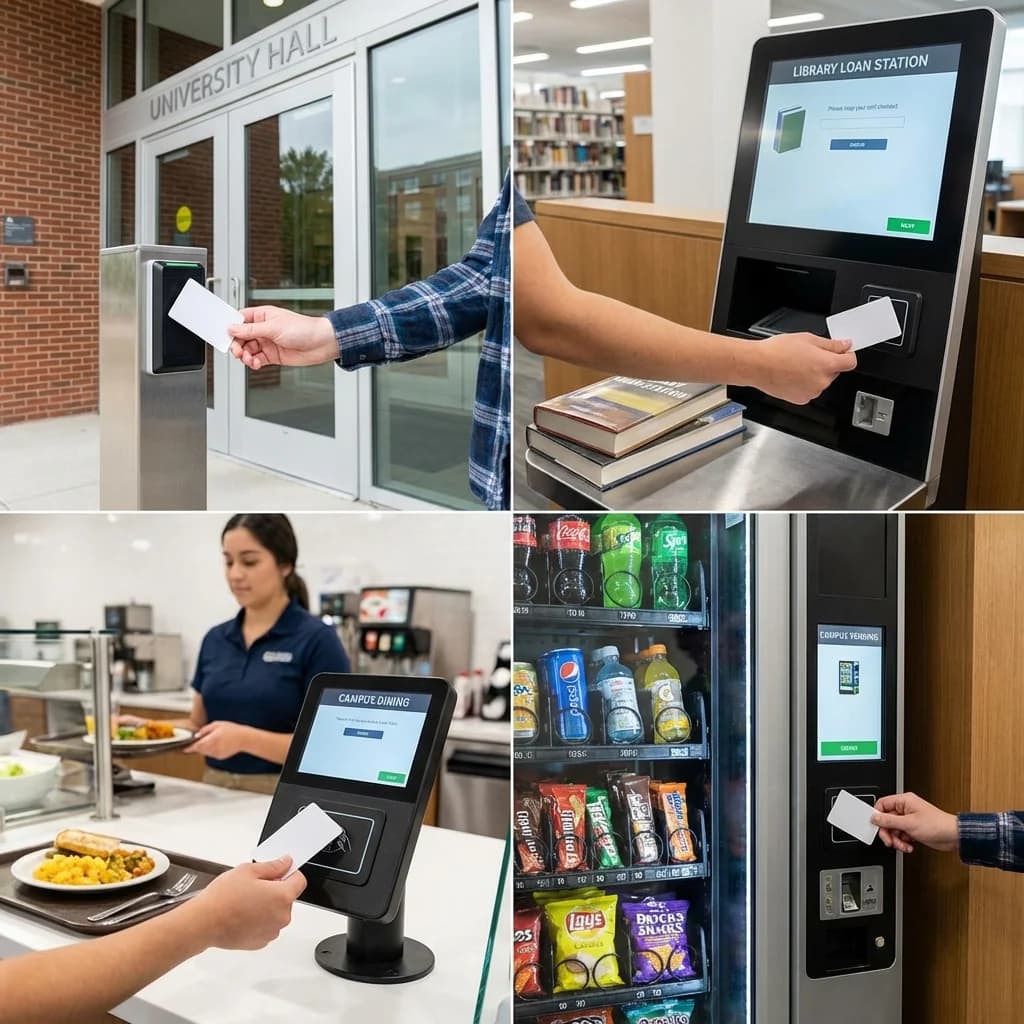
Campus Card Use Cases: Access, Payments, Library & Dining
Every major use case for RFID campus cards — access control, meal plans, library, laundry, printing, parking, transit and events. Infrastructure and ROI.