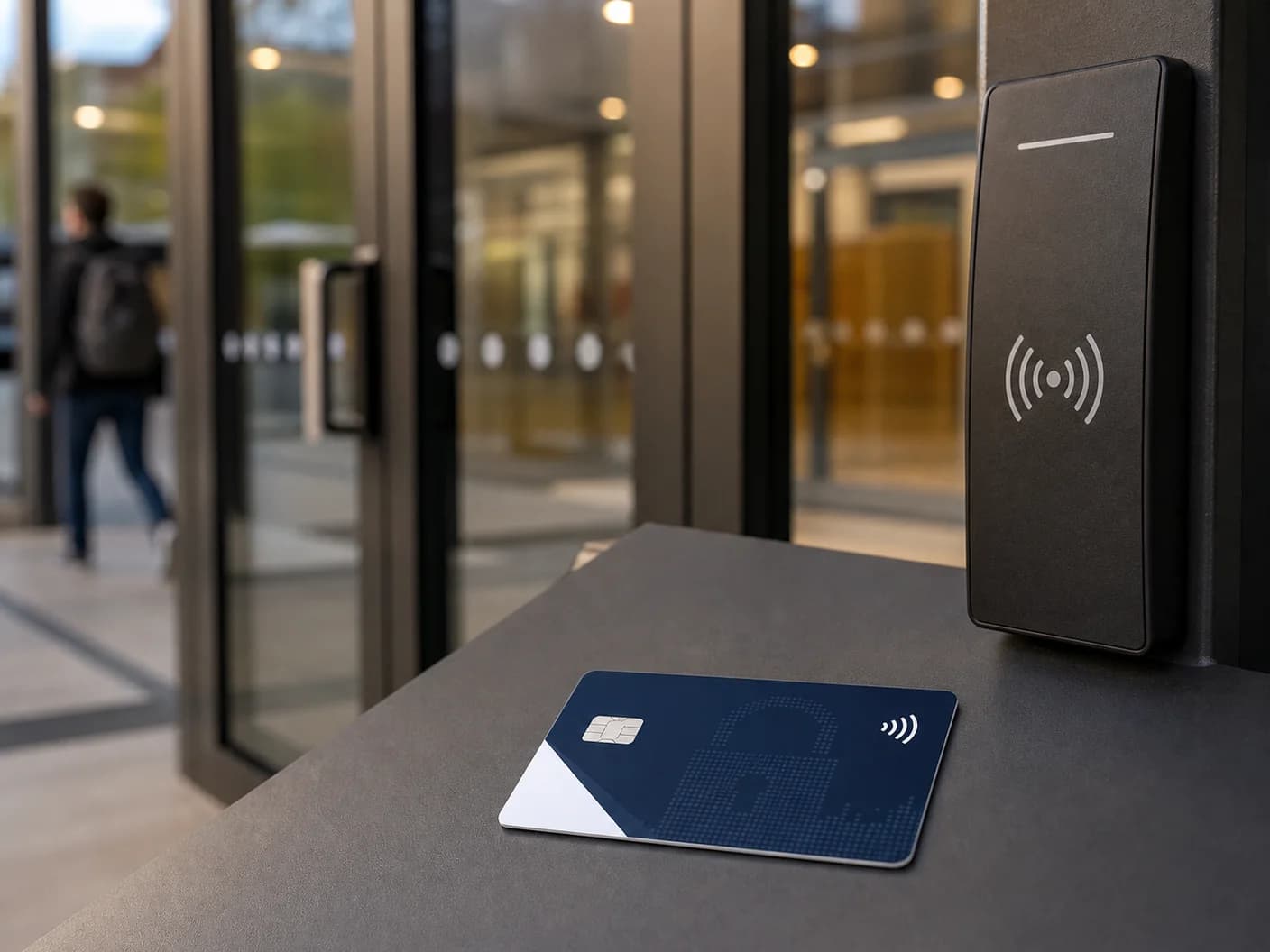
Access Control Cards
Our campus access control cards are specified for the installed reader and credential environment. Available constructions include high-security 13.56 MHz and dual-frequency combinations for phased migration from legacy readers. Chip availability, licensing, data format and key-management responsibilities are confirmed before sample production.
Ideal for
- Building and dormitory access
- Laboratory and research facility entry
- Parking garage access
- Restricted area security
Features
- Multi-technology support (dual-frequency 125kHz + 13.56MHz)
- Specified and sample-tested for the installed access-control platform, reader firmware and wireless-lock environment
- Custom full-color printing with photo ID integration
- Magnetic stripe and barcode/QR code options
- Punch slot for lanyard attachment
- Available in PVC and recycled PVC materials
Specifications
Physical
Technical
Ordering
Proof, not promises
Every production run starts with a testable specification.
We confirm card construction, chip family, data format, artwork and reader-test requirements before mass production. Sample approval is the decision gate—not a generic compatibility claim.
Technical project details are shared directly with qualified institutional buyers where confidentiality allows.
Compatibility
| Platform / use case | Supported | Notes |
|---|---|---|
| Access control panels | Yes | Compatible with the major access platforms used in higher education. Specific panel notes available in our campus card systems guide. |
| Dual-frequency reader fleets | Yes | 125 kHz LF + 13.56 MHz HF on a single card body enables phased migration from legacy proximity readers to modern contactless without forcing a fleet swap. |
| Wireless lock systems | Yes | Dormitory and office wireless locks reading 13.56 MHz HF credentials work out of the box; LF-only locks are supported via the dual-frequency variant. |
| Visitor management & temporary credentials | Yes | Short-validity cards with the same chip family for contractors, conferences, and visiting researchers. |
Encoding options
- Site code + card number in the panel-specified bit format
- AES-128 diversified keys with mutual authentication on contactless reads
- Optional Wiegand 26 / 34 / 37 / 56 bit format mapping
- Anti-passback support via per-card UID tracking at the panel
Sample-kit workflow
- 1Share your access platform name + reader manufacturer + bit format expected by the panel.
- 2We quote and ship 5 pre-encoded sample cards in your site code + a small card-number range.
- 3You test entry at perimeter, dorm, and lab readers.
- 4Adjust key derivation or bit format if anything mis-reads.
- 5Full order from your final site code + cardholder range + artwork.
What to watch for
Common pitfalls during a card-program rollout and how we address them.
Frequently asked questions
- Will these cards work with our existing readers?
- If your readers are 13.56 MHz ISO 14443A — yes, with the right chip family and key set. If you're mid-migration with a mixed LF/HF fleet, our dual-frequency option carries both technologies on a single card. We confirm specifics in writing during the sample-kit phase.
- How does AES-128 mutual authentication actually prevent cloning?
- Each card holds a unique key derived from a master key + the card's UID. To unlock, the reader sends a random challenge; the card signs it with the per-card derived key; the reader verifies. A cloned card UID alone cannot produce the correct signature — the master key never leaves the issuer's HSM.
- What's the read range?
- 0-10 cm typical for the HF interface. Practical tap range at most modern readers is 2-5 cm by design — short range is a feature, not a limitation, because it prevents accidentally authenticating the wrong cardholder in a queue.
- Can we do site-specific bit formats (Wiegand 37, 56, etc.)?
- Yes — we can encode the chip's emitted data in any standard or custom Wiegand format your panel expects. Provide the bit-format spec during the sample-kit phase.
- What about visitor / contractor cards?
- Same chip family, just issued with shorter validity windows or restricted-zone authorizations at the panel level. We can ship pre-personalized visitor cards as a small standing inventory if your security team prefers physical-stock issuance over on-site printing.
Related Products
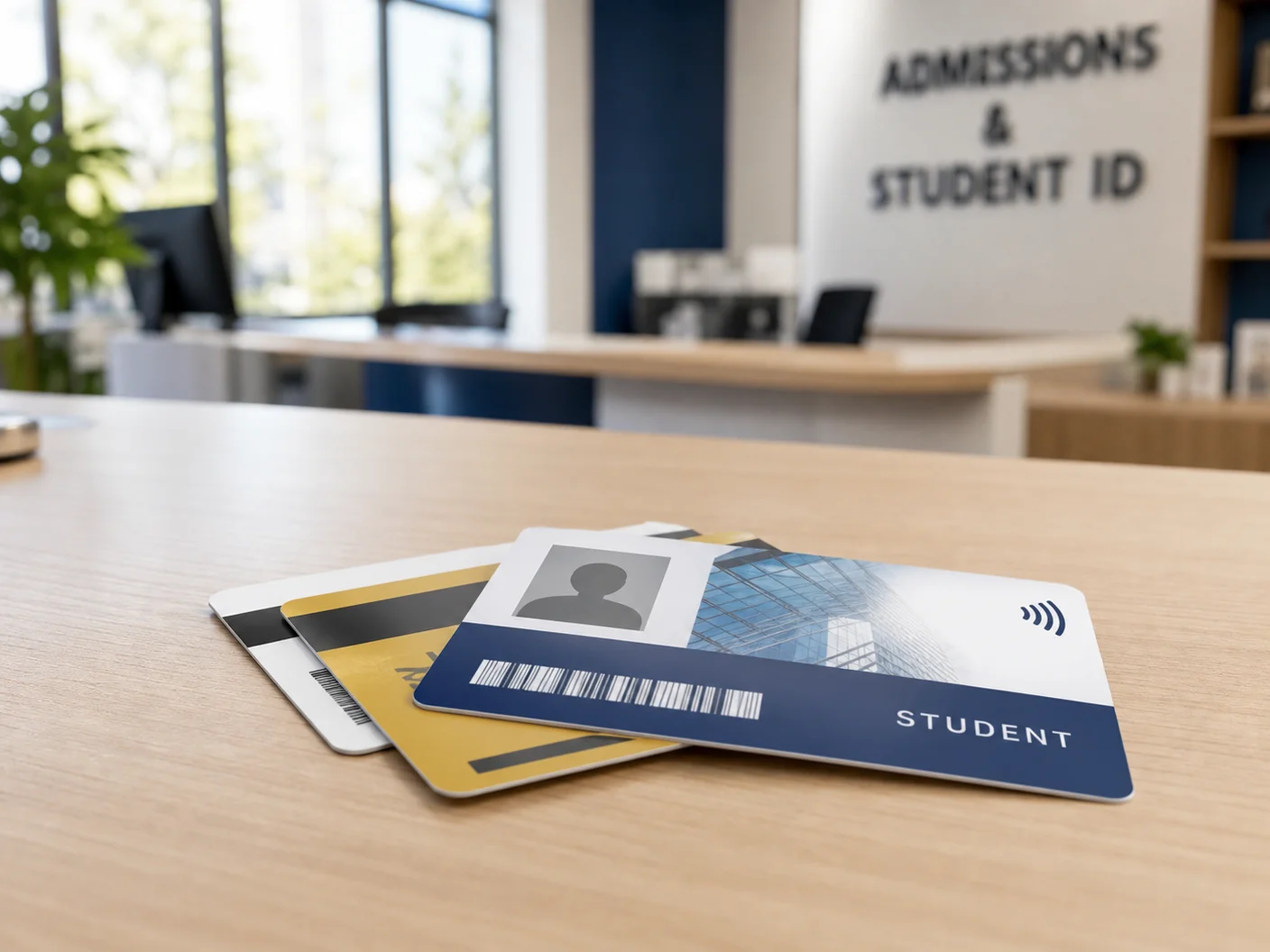
Student ID Cards
RFID student ID cards specified for campus access, dining, library, payments and attendance workflows, subject to each institution's reader and data requirements.
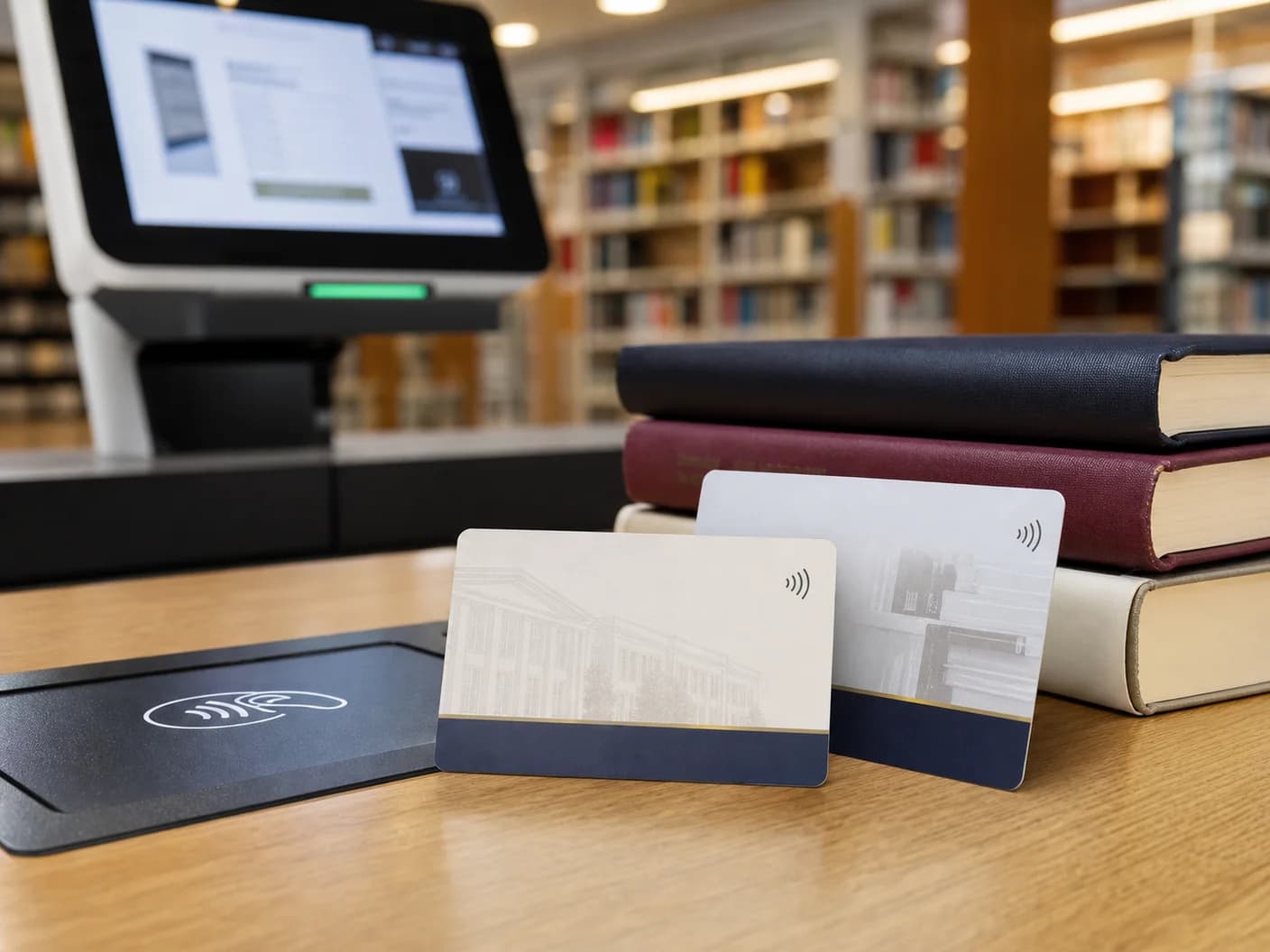
Library Cards
RFID cards for automated book checkout, attendance tracking, and resource management across campus libraries.
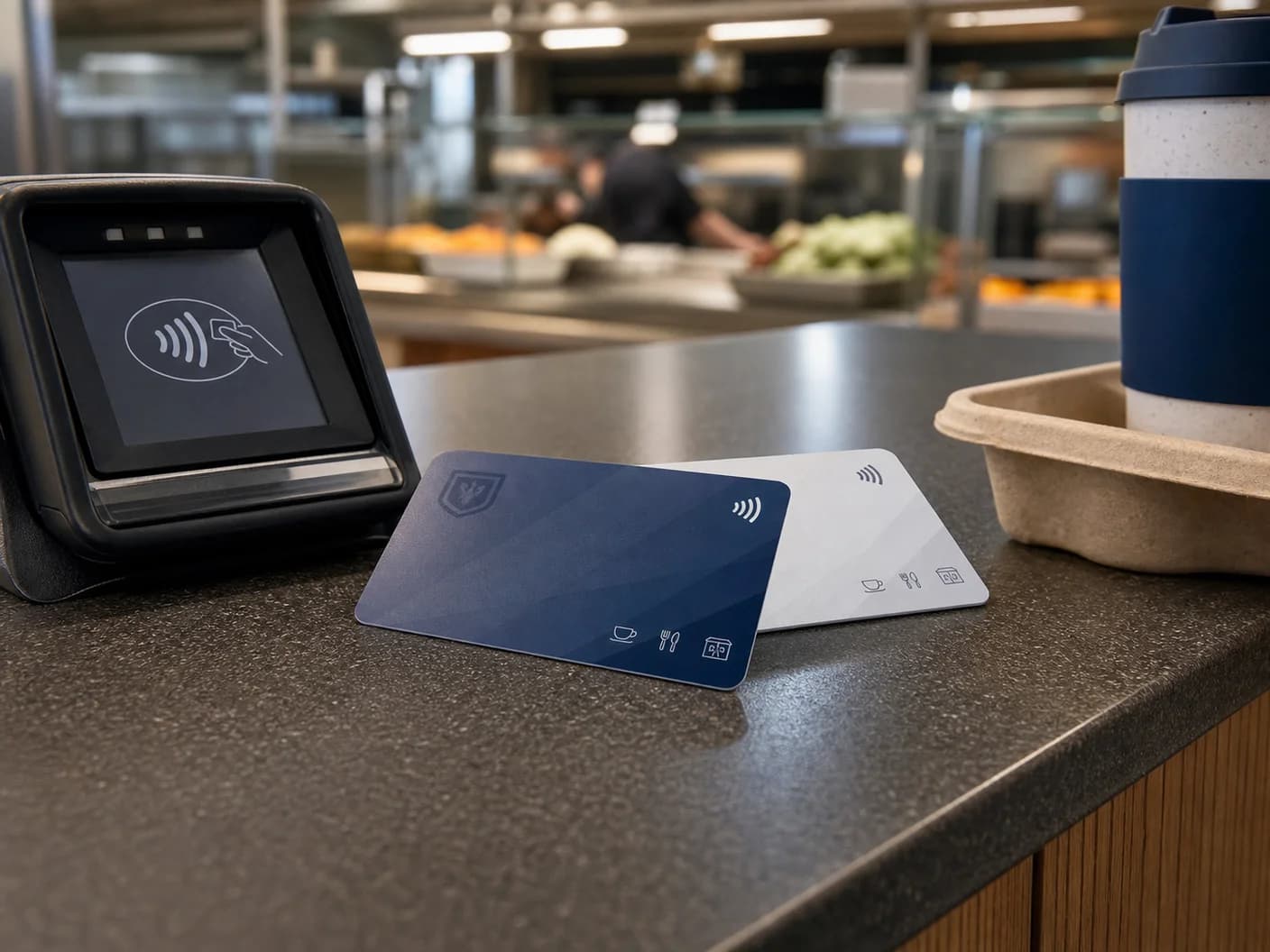
Payment Cards
Cashless payment RFID cards for campus dining halls, bookstores, vending machines, and laundry facilities.
Ready to order?
Get a custom quote for access control cards tailored to your institution's needs.