RFID ID Cards in K-12 Schools: A 2026 Implementation Guide
How K-12 schools deploy RFID ID cards for student attendance, building access, cashless cafeteria, library, and parent communication. Privacy law (FERPA, COPPA, state biometric laws), chip selection, and what to budget.
How this guide is reviewed
CampusRFID reviews technical guides against standards and official documentation. Where a source list appears, it identifies the primary references used. Card and reader compatibility should still be verified with a sample on the institution's installed system.
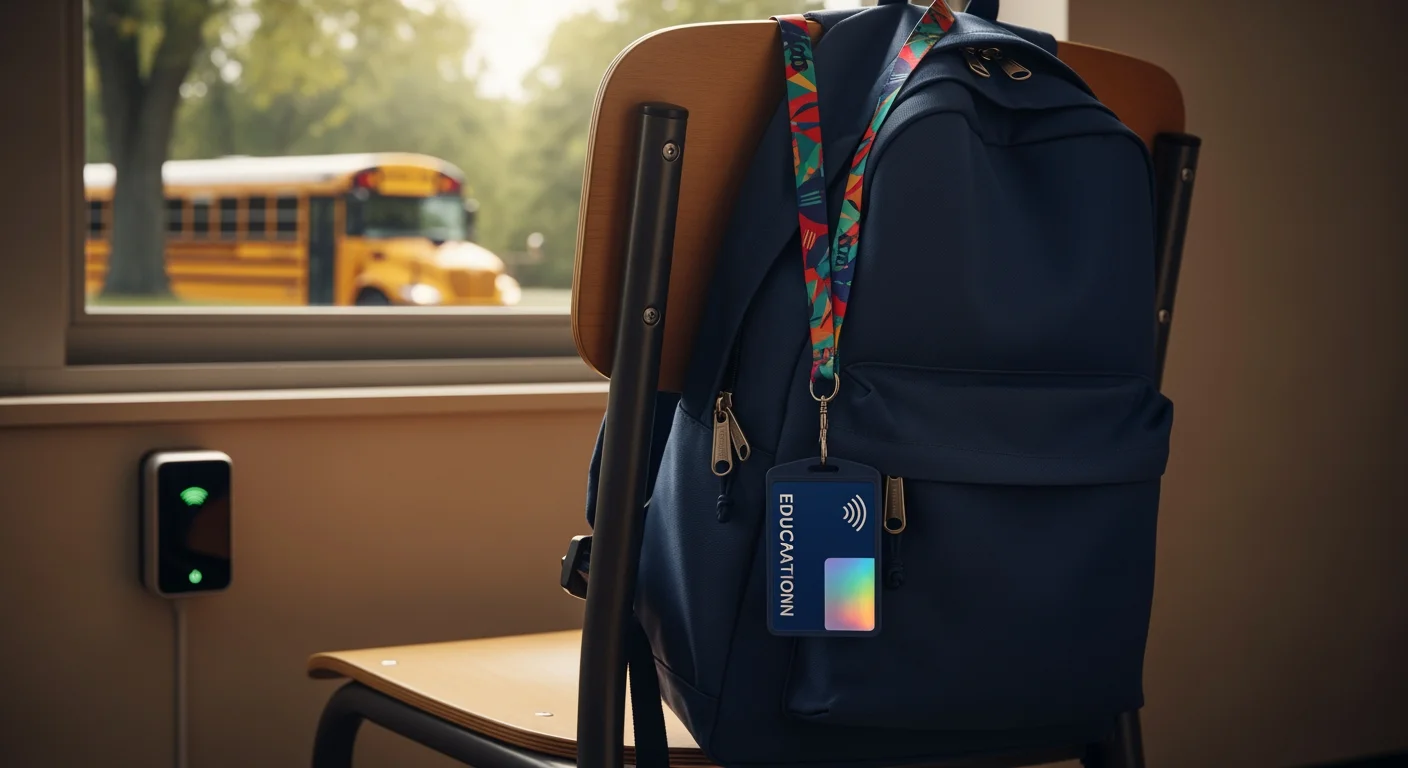
Some K-12 schools use RFID ID cards to connect attendance, access, cafeteria, library, or transport workflows. Whether those uses are appropriate depends on the district's operational need, privacy assessment, local law, reader placement, and the alternatives available to students and families.
This guide explains how RFID ID cards work in K-12 specifically (which is meaningfully different from higher education), the privacy law that constrains the design, and what to spec for a district-wide rollout.
What RFID ID Cards Do in a K-12 School
The five most common K-12 use cases:
All five run off the same physical card.
Why K-12 Is Not the Same as Higher Education
K-12 programs involve minors and parent or guardian rights, district governance, and state or national child-privacy rules. Consent is not the only possible legal basis, and requirements vary by jurisdiction and use case, so a district should not treat a higher-education credential policy as a ready-made K-12 policy.
The implications:
Privacy Law: FERPA, COPPA, and State Biometric Laws
A K-12 RFID program in the United States operates inside three privacy frameworks:
FERPA (Family Educational Rights and Privacy Act)
FERPA governs education records at covered US schools. RFID-generated attendance, lunch, library, access, or transport records are education records when they are directly related to a student and maintained by the school or a party acting for it. FERPA gives parents — and eligible students when rights transfer — rights to inspect and seek amendment of education records and limits disclosure of personally identifiable information unless consent or an exception applies.
A UID or other unique identifier can be personally identifiable information when it is linked or linkable to a student. Separating the identifier from the visible name can reduce exposure, but it does not make the mapping or related records exempt from FERPA.
COPPA (Children's Online Privacy Protection Act)
COPPA applies to operators of covered commercial websites and online services directed to children under 13, and to operators with actual knowledge that they collect personal information online from a child under 13. It does not impose obligations directly on schools or automatically cover every RFID system. For a covered education service, a school may consent on a parent's behalf only for a school-authorized educational purpose and not for an unrelated commercial purpose. Contracts should define collection, use, security, retention, deletion, disclosure, and the parties' FERPA and COPPA responsibilities.
State Biometric Laws (Illinois BIPA, Texas, Washington, etc.)
If the RFID program is paired with biometric identification such as fingerprint, face, or palm-vein recognition, additional state biometric and student-privacy laws may apply. The definitions, consent rules, retention schedules, private rights of action, and school-specific exceptions differ by state and require jurisdiction-specific legal review.
The simplest path: stay RFID-only. Cards do not trigger BIPA-class statutes the way fingerprint readers do.
EU Schools: GDPR and the Special Category for Children
In the EU, the GDPR applies when a school or provider processes identifiable student data. Article 8 addresses consent for an offer of information-society services directly to a child; it is not a general parental-consent rule for every school RFID use. The relevant age is 16 unless a member state sets a lower age of at least 13, and other lawful bases can apply where their conditions are met.
The controller must select and document the appropriate lawful basis, provide transparent notices, minimize data, set retention periods, and protect data-subject rights. A Data Protection Impact Assessment is required under Article 35 when the planned processing is likely to result in a high risk; systematic monitoring, sensitive data, scale, and the involvement of children are factors to assess rather than a blanket rule for every card deployment.
Chip Selection for K-12 RFID Cards
The chip choices for K-12 are narrower than for higher ed because the use cases are simpler:
For a new multi-use K-12 program, AES-authenticated 13.56 MHz credential or current AES-authenticated configuration is generally a more defensible starting point than legacy sector-memory credential, subject to reader and platform compatibility. A limited card budget should not be used to justify a credential whose security is inadequate for the intended risk.
Card Form Factors for K-12 Students
K-12 cards take more abuse than higher-ed cards. They live in pockets, backpacks, and lunchboxes; they're stepped on, washed, and chewed. Common form factors:
Choose the form factor after a small durability and loss-rate pilot with the relevant student age groups rather than assuming one attachment method will halve replacements.
Bus Boarding: A K-12-Specific Use Case
School-bus RFID is one of the strongest parent-satisfaction features of a K-12 program. The architecture:
Where the district enables parent notifications, the system can report boarding or alighting events and combine them with separately governed vehicle-location data. Policies should distinguish the bus's location from the child's location and explain latency or connectivity limits.
Transport notifications can be valuable, but they also expand the privacy, security, retention, and incident-response scope of the program and should be evaluated with parents and transport staff before deployment.
Budgeting an RFID ID Cards Program for a K-12 District
Build the budget from a site inventory and written supplier quotes rather than generic unit-price ranges. Include cards and replacements; readers, controllers, locks, and installation; card printing and issuance; SIS, access, library, cafeteria, and transport integrations; mobile connectivity; software licensing and support; privacy and security work; training; spares; and decommissioning. Model at least a pilot, initial rollout, annual operations, replacement demand, and a five-year refresh scenario. The result can vary substantially with the number of doors, buses, integrations, and existing infrastructure.
Common Mistakes in K-12 RFID Programs
Where to Go From Here
A K-12 RFID ID card program is a privacy-sensitive, parent-visible deployment. Start with a defined purpose, minimal on-card data, a protected UID-to-student mapping, bounded reader placement, a lawful data-governance model, and an accessible fallback. Then select the credential and backend that meet those requirements.
Browse our student ID cards and access control cards, or read about the campus card systems and services that scale from K-12 districts to large universities. Contact us to discuss your district's RFID program.
Primary sources
Standards, regulations, and first-party technical documentation consulted for this review.
- K-12 School Security Guide (3rd Edition) — Cybersecurity and Infrastructure Security Agency
- Family Educational Rights and Privacy Act regulations — U.S. Department of Education
- Complying with COPPA: Frequently Asked Questions — Federal Trade Commission
Explore this topic
Product pages selected for the subject covered in this guide.
Student ID Cards
RFID student ID cards specified for campus access, dining, library, payments and attendance workflows, subject to each institution's reader and data requirements.
Access Control Cards
High-security RFID access control cards for campus buildings, dormitories, laboratories, parking, and restricted areas.
Ready to Implement RFID on Your Campus?
Contact us to learn how our RFID solutions can improve campus security and student experience.
Related Articles
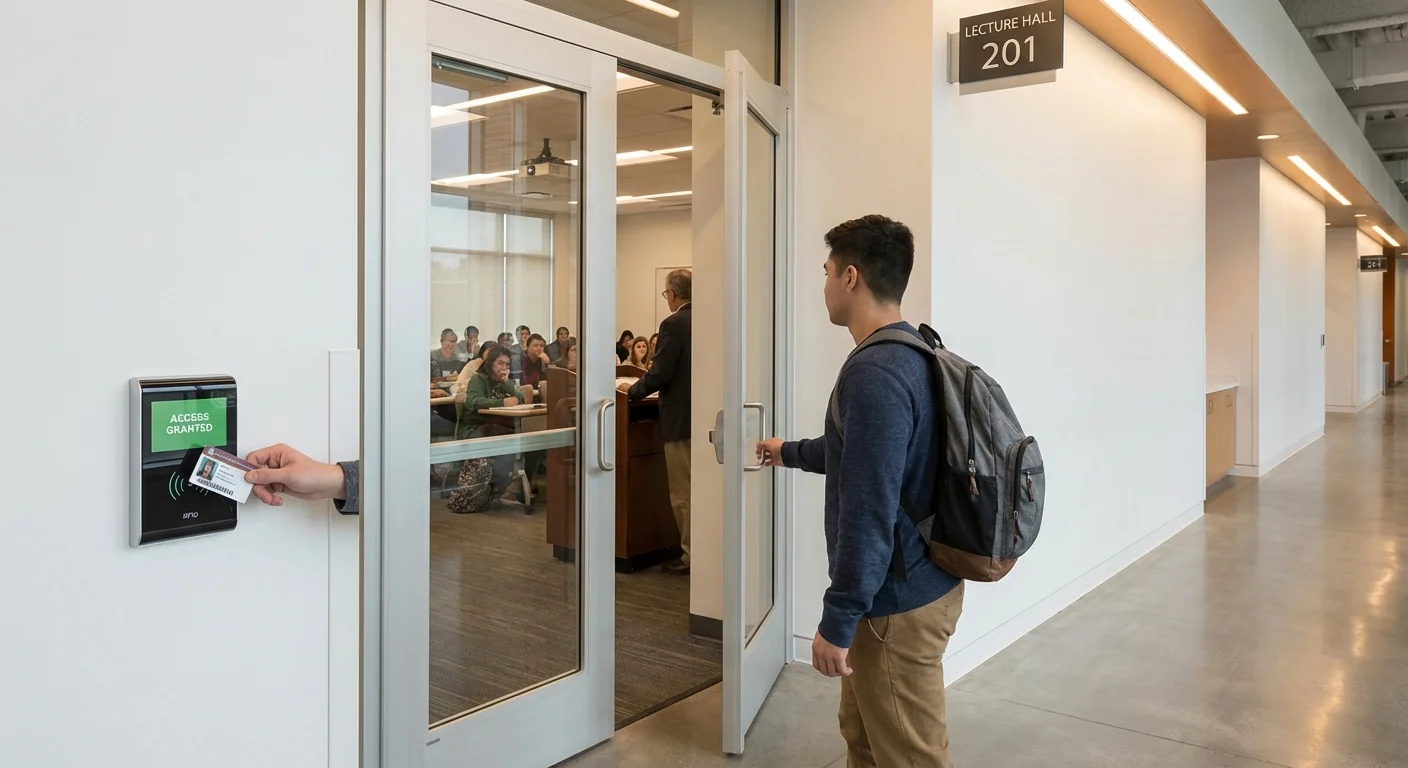
RFID Attendance Tracking for Universities: Complete Implementation Guide
RFID-based attendance tracking eliminates manual roll calls and buddy punching while giving universities real-time insight into lecture attendance patterns. This comprehensive guide covers the technology, integration with learning management systems, and GDPR considerations for European institutions.
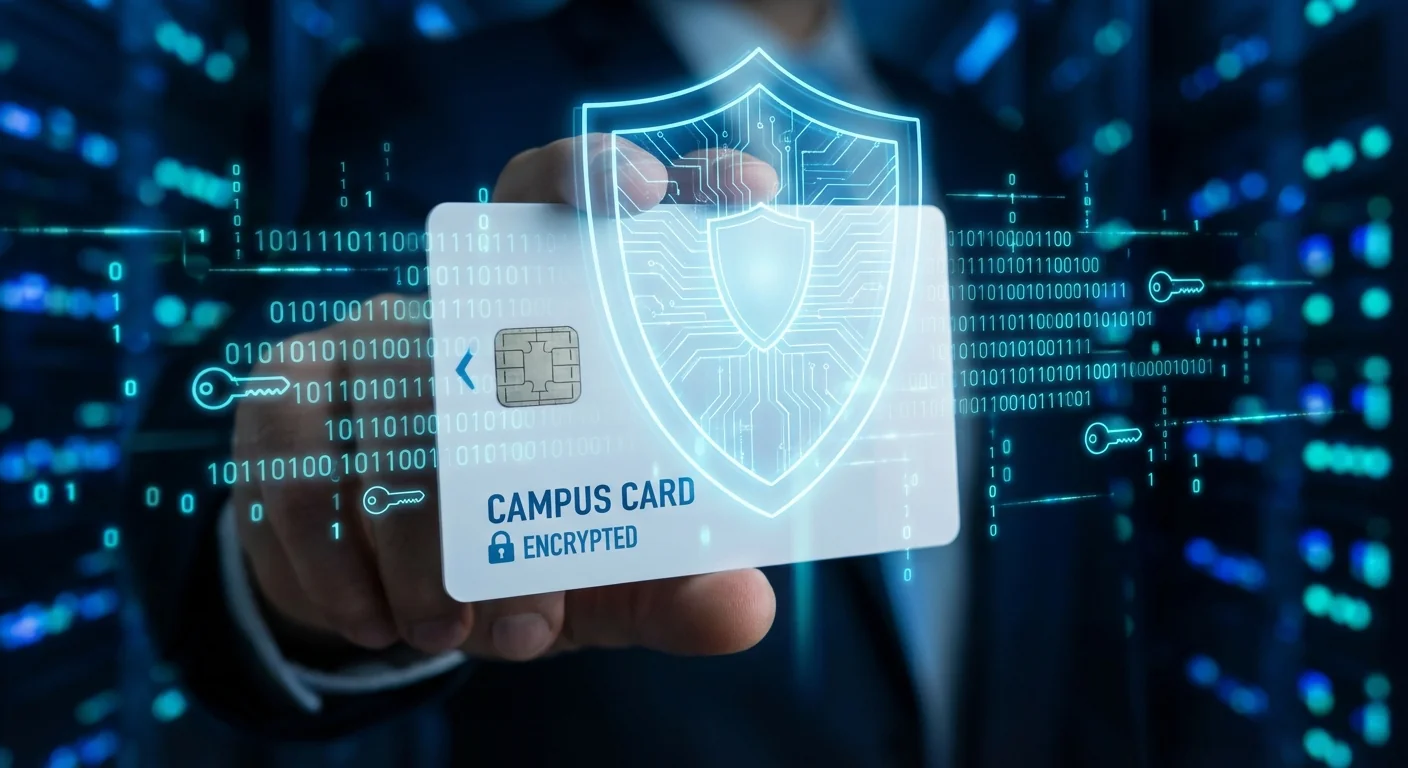
Campus Card Security: Encryption, Authentication, and Cloning Prevention
From the broken Crypto-1 cipher on legacy sector-memory 13.56 MHz credential to AES-128 encryption on modern AES-authenticated 13.56 MHz credentials, campus card security has evolved dramatically. This deep dive covers how encryption, mutual authentication, and diversified keys protect your campus — and why legacy systems must be replaced.