Solution scope
The credential layer for an installed access-control system.
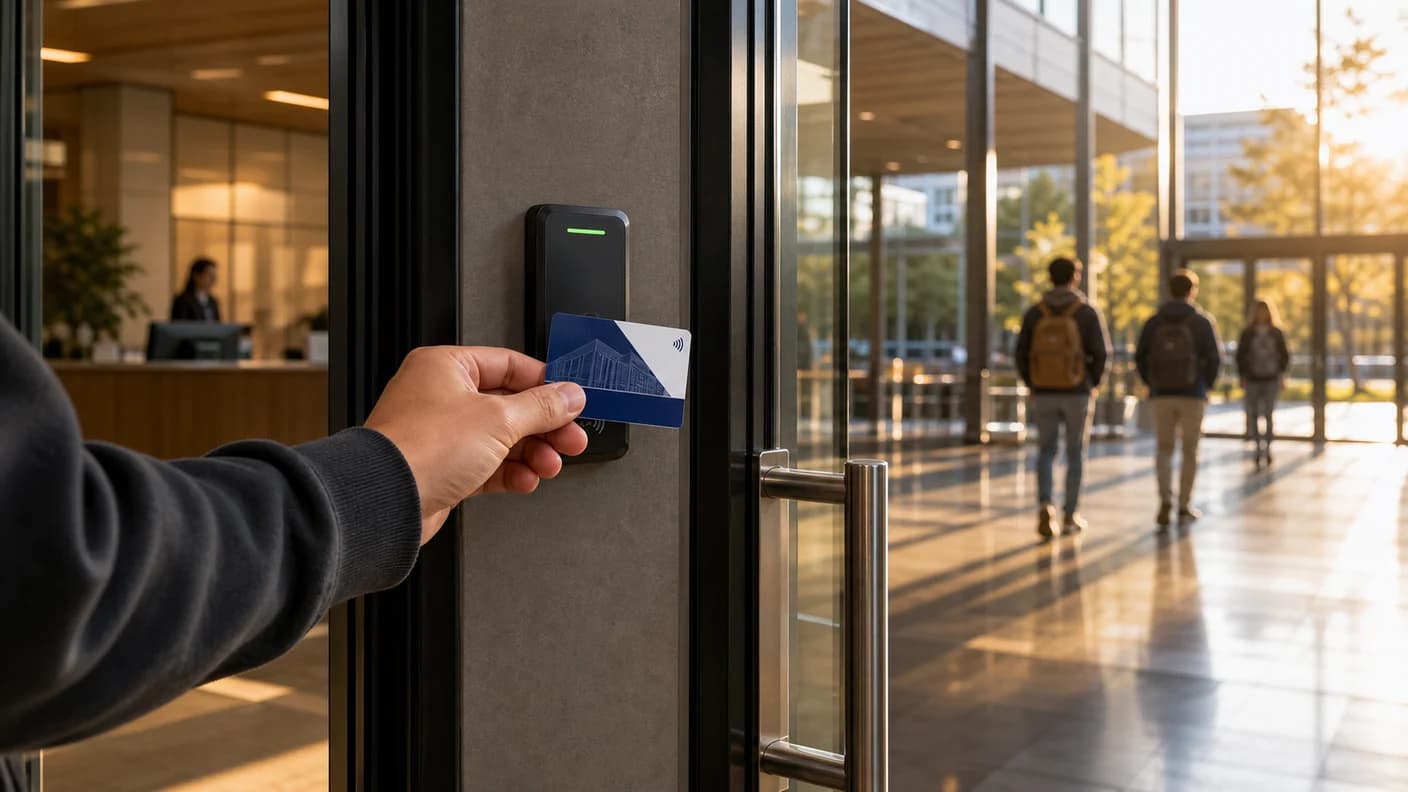
CampusRFID supplies the physical cards and agreed personalization or encoding profile. The university or its security integrator remains responsible for readers, controllers, permissions and access-control software. Separating those roles keeps the card specification testable and prevents a visually correct credential from being treated as technically compatible without evidence.
Operational outcomes
What a controlled credential program improves.
One controlled identity format
Bring student or staff identification, visible security features and the required access credential into a repeatable card construction.
Reader-tested samples
Approve representative samples against the institution's own readers and enrolment process before authorizing the production run.
Clear issuance records
Define printed fields, data handling and batch references so replacement and re-order requirements are easier to control.
Specification checklist
What the university should confirm before production
Access cards are system-dependent. A reliable specification starts with the installed environment and a known working reference, then adds the institution's artwork and personalization requirements.
- Installed reader or access-platform documentation and an approved working credential
- Required RFID technology, memory or identifier handling—confirmed rather than inferred
- Printed identity fields, photo format, numbering and any visual security elements
- Card construction, finish, slot-punch restrictions and expected daily wear
- Sample testing, production approval and re-order version control
Implementation path
From installed system to approved production.
- 01
Review the installed environment
We translate the reader, credential and issuance requirements into a card specification with explicit unknowns and approval points.
- 02
Produce and test samples
Representative cards are checked for artwork, construction and agreed functional behavior on the university's own system.
- 03
Lock the production reference
The approved sample and documented data profile become the reference for production and later repeat orders.
Frequently asked questions
Before you finalize the card brief.
Can CampusRFID guarantee compatibility from a reader brand name alone?
No. Reader branding is not enough to identify the credential technology, data format or enrolment method. Compatibility should be confirmed from system documentation and representative sample testing.
Can access and photo identification be combined on one university card?
They can be combined when the installed system and card construction support the required credential. Printed identity fields and technical behavior are specified separately, then tested together.
Does CampusRFID install access-control readers and software?
CampusRFID focuses on the physical credential and agreed card production services. Reader, controller and software responsibilities remain with the institution or its appointed security integrator.