Solution scope
A patron credential—not a replacement for the library platform.
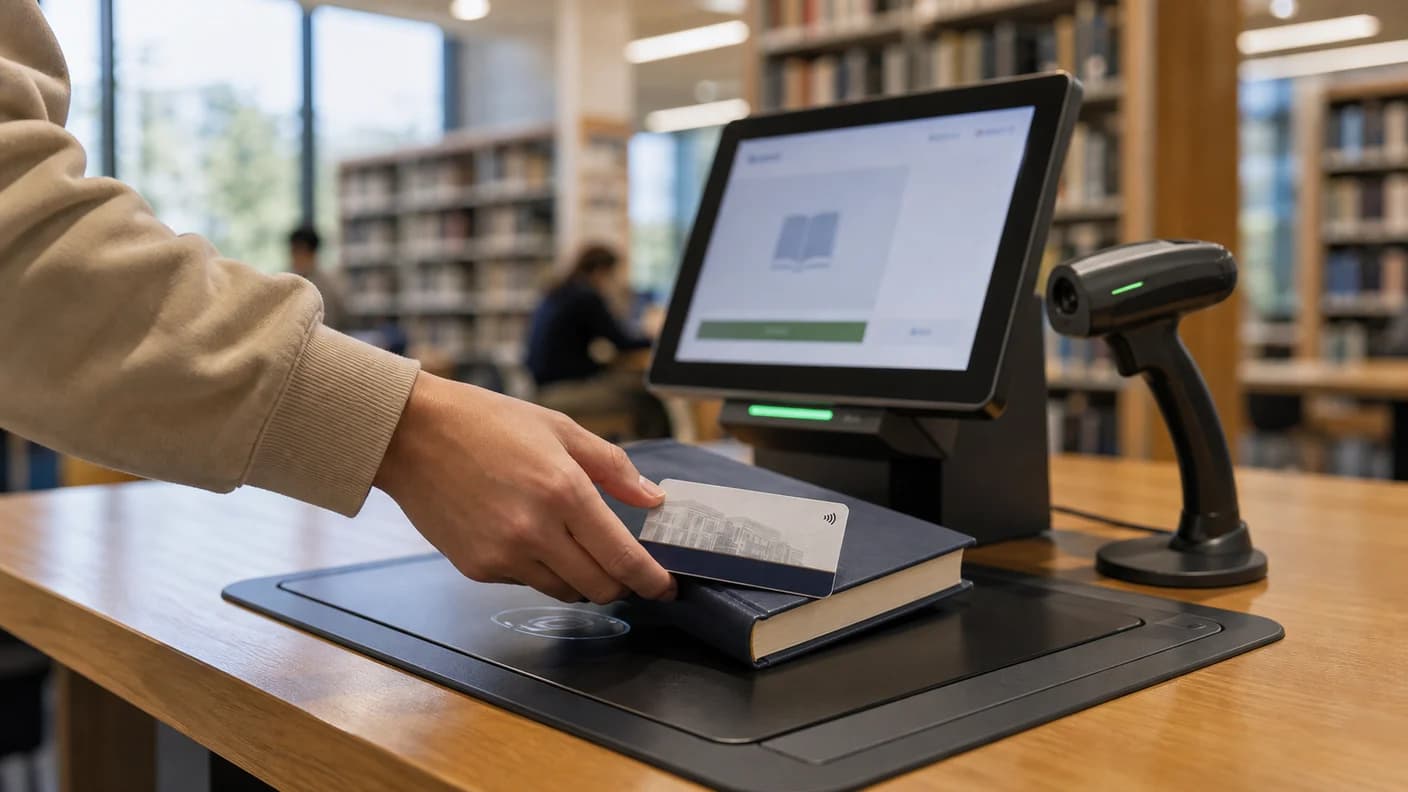
The card identifies or links the authorized user within the library's chosen environment. Catalog records, book tags, circulation rules, kiosks and library-management software remain separate system components. CampusRFID manufactures the card layer to an approved technical and visual specification and can align it with a wider student one-card design.
Operational outcomes
What a controlled credential program improves.
Consistent borrower identity
Use a defined card number, barcode, RFID credential or approved combination that fits the current circulation workflow.
One-card continuity
Coordinate the library credential with the wider student ID program where the installed platforms support a shared card construction.
Self-service readiness
Test sample credentials at the actual service desk, gate or kiosk touchpoints included in the university's approval plan.
Specification checklist
What defines a library credential
The correct card depends on how the library identifies patrons today. The visible card number, machine-readable data and account relationship should be documented before artwork is treated as production-ready.
- Library-management platform and the patron-identification method currently in use
- Barcode symbology, printed numbering or RFID data requirements where applicable
- Whether the card is library-only or part of a wider student one-card program
- Photo, name, expiry, signature panel and other visible identity fields
- Sample checks at the circulation desk, gates and self-service equipment in scope
Implementation path
From installed system to approved production.
- 01
Map the patron workflow
We document how the card is issued, identified and used at the service points the institution wants included in testing.
- 02
Align data and artwork
Numbering, barcode or agreed RFID requirements are coordinated with the printed layout and card construction.
- 03
Approve on-site behavior
The institution validates representative samples in the real library environment before the approved version moves to production.
Frequently asked questions
Before you finalize the card brief.
Is an RFID library card the same as an RFID book tag?
No. A patron card identifies or links a user account, while a book or media tag identifies a collection item. They have different data, construction and system roles.
Can a student ID also work as a university library card?
Yes, when the library and campus identity systems support the required identifier or credential. That relationship must be confirmed from the installed platforms and tested before production.
Can CampusRFID reproduce an existing library card design?
CampusRFID can work from institution-approved artwork and specifications. Technical compatibility, numbering and data requirements still need independent confirmation rather than being inferred from the old card's appearance.