The credential shown
A credential designed around the institution identity.
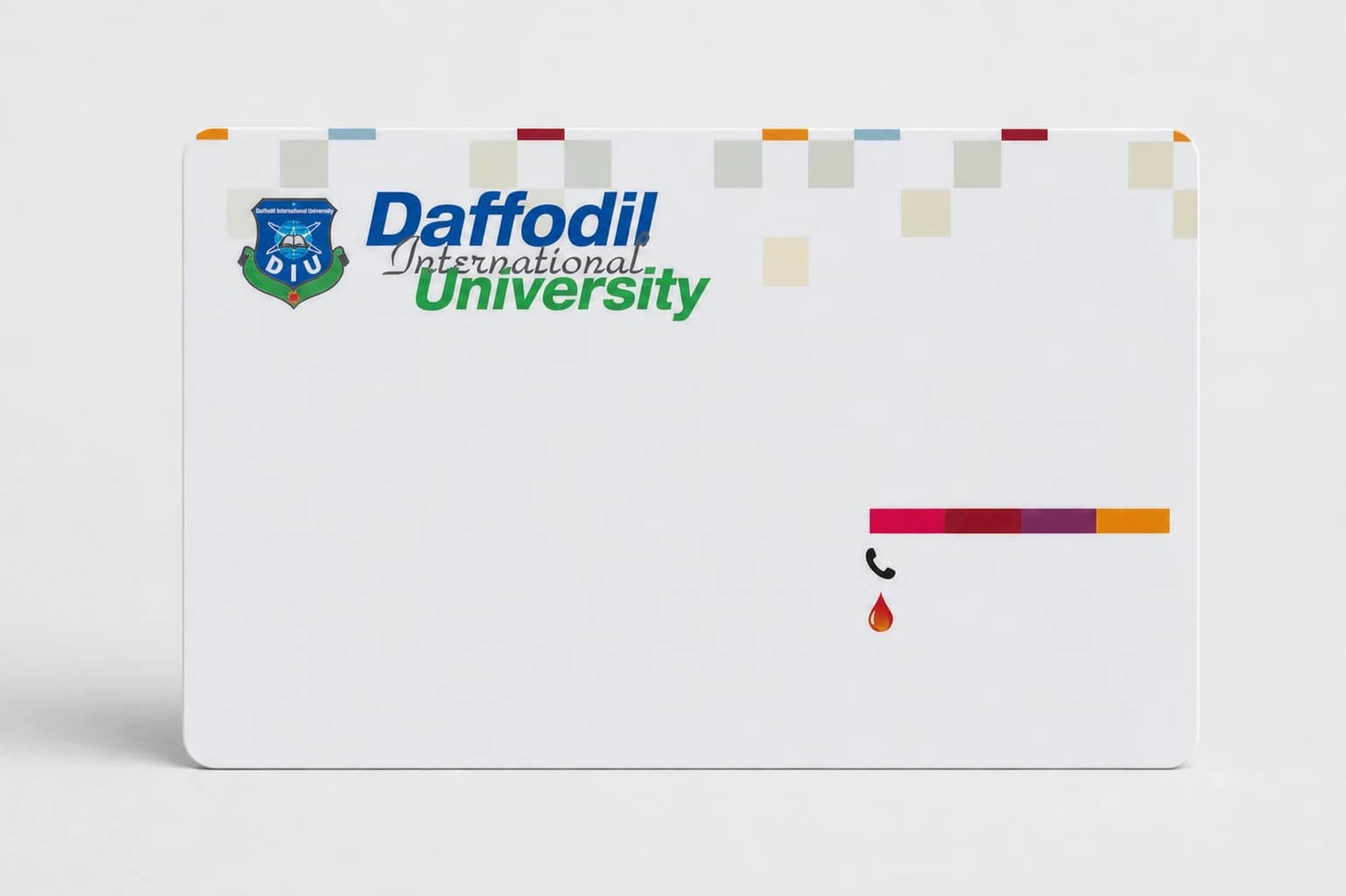
The card keeps most of the surface white, using the Daffodil International University mark as the primary identifier. A run of small colored squares and a compact multicolor bar introduce visual energy while preserving generous space for variable information.
Archive scope
A record of the physical credential shown.
This page records a previously produced printed credential bearing Daffodil International University artwork. It is limited to the visible card body and print shown; it does not state a current contract, endorsement, institution-approved technical specification, chip, encoding format, order quantity, reader platform or commercial terms.
Institution names and marks remain the property of their respective owners. The archive does not grant permission to reproduce the artwork or use those marks for another organization.
Our production approach
A specification-first path from artwork to production.
New institutional projects start from the current requirement—not from assumptions about an archived card. Card construction, technology, data, personalization and artwork are confirmed independently for every new specification.
- 01
Artwork and construction check
We separate what must appear on the card from the physical construction and personalization fields, then check artwork, safe areas and production tolerances before a sample is made.
- 02
Physical sample approval
A representative sample gives the institution a physical decision point for color, finish, print registration and any agreed functional testing before volume production.
- 03
Controlled production reference
The approved specification becomes the production reference for the run. Any later revision is documented instead of being inferred from a logo file or an earlier order.