MIFARE DESFire EV3 vs iCLASS vs SEOS: Campus Card Chip Comparison Guide
Choosing the right chip technology for your campus card program is one of the most consequential decisions a university will make. This guide compares the three dominant contactless smart card platforms — NXP MIFARE DESFire EV3, HID iCLASS, and HID SEOS — across security, cost, compatibility, and migration paths.
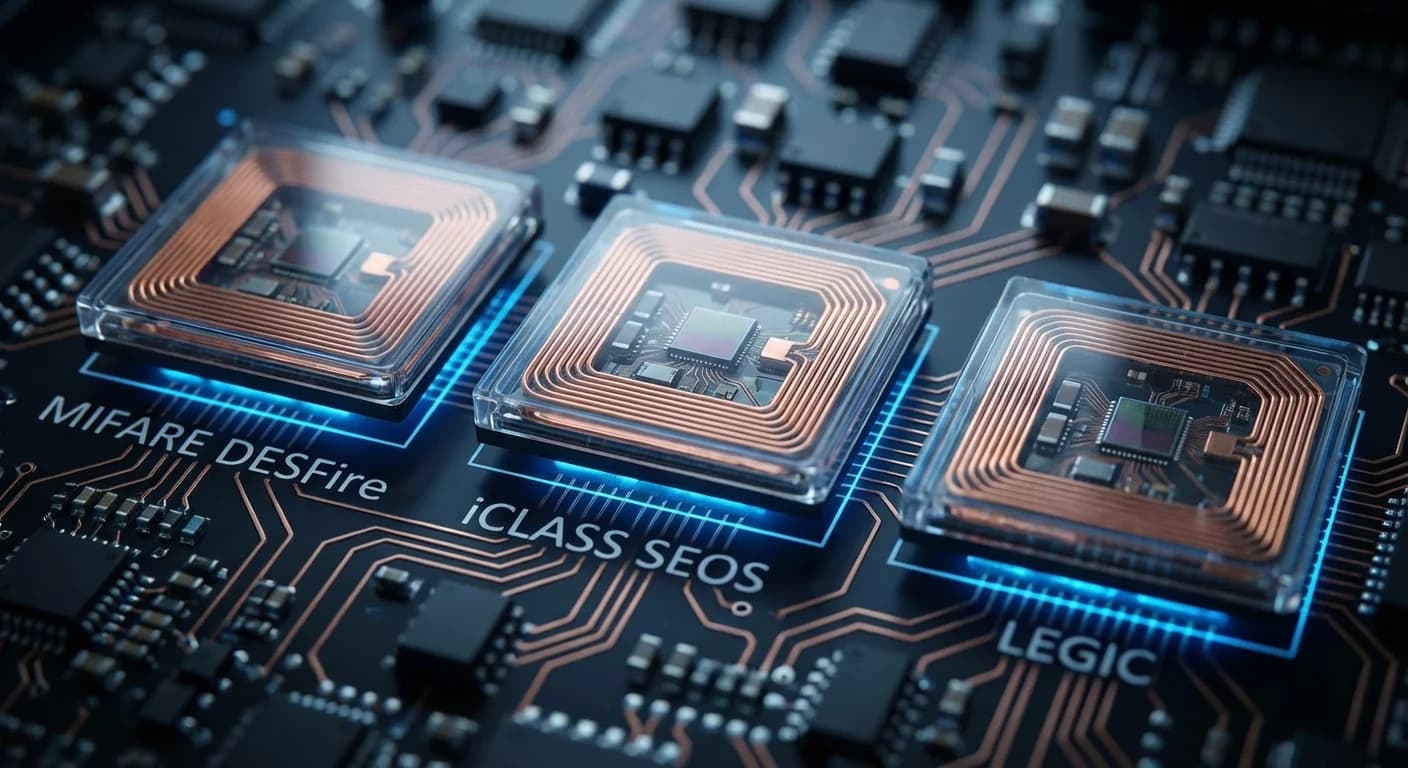
Choosing the right chip technology for your campus card program is one of the most consequential decisions a university will make. The chip determines not just what the card can do today, but how easily the institution can adapt to mobile credentials, tighter security standards, and new applications over the next decade. Three platforms dominate campus card deployments worldwide: NXP's MIFARE DESFire EV3, HID's legacy iCLASS, and HID's next-generation SEOS. Each comes with distinct strengths, limitations, and long-term implications.
MIFARE DESFire EV3: The Open-Standard Workhorse
MIFARE DESFire EV3, manufactured by NXP Semiconductors, operates on the ISO 14443A standard at 13.56 MHz. It is the most widely deployed contactless smart card chip in higher education outside North America and has been gaining significant ground in the US market as well.
Security Architecture
DESFire EV3 implements AES-128 encryption with mutual authentication between card and reader. The chip holds Common Criteria certification at EAL5+, the highest evaluation level typically seen in campus card deployments. Each application on the card can have its own set of cryptographic keys, meaning that the access control application, the meal plan, and the library system each operate in isolated security domains. Even if one application's keys were compromised, the others remain protected.
The chip supports transaction MAC (Message Authentication Code), which provides cryptographic proof that a transaction actually occurred — critical for cashless payment applications where disputes can arise. EV3 also introduced Secure Dynamic Messaging (SDM), enabling secure communication with NFC-enabled smartphones without requiring a dedicated app.
Memory and Applications
DESFire EV3 is available in 2KB, 4KB, and 8KB memory configurations. The 4KB variant is the most common in campus deployments, offering enough space for 8-12 separate applications. Each application can store multiple files with independent access rights. A typical campus card might allocate applications for door access, meal plan balance, library privileges, printing credits, parking access, and vending — all on a single 4KB chip.
Ecosystem and Compatibility
Because MIFARE DESFire is based on open ISO standards, it works with readers from hundreds of manufacturers. This avoids vendor lock-in and creates competitive pricing for infrastructure. Universities can mix readers from different suppliers and still maintain a unified card program. DESFire EV3 is backward compatible with EV1 and EV2 readers, making phased upgrades practical.
HID iCLASS: The Legacy Platform Being Phased Out
HID's iCLASS platform was the dominant campus card technology in North America throughout the 2000s and 2010s. Operating at 13.56 MHz with a proprietary protocol, iCLASS cards offered a significant security improvement over the 125 kHz proximity cards they replaced.
Why iCLASS Is Being Retired
The original iCLASS system uses a proprietary encryption scheme that was publicly compromised in 2010. Researchers demonstrated that iCLASS cards could be cloned using commercially available equipment, undermining the security premise of the entire platform. HID responded with iCLASS SE (Secure Element), which added an additional layer of security, but the fundamental architecture remained proprietary and limited.
iCLASS cards typically offer only 2KB of memory with limited application segmentation. The proprietary protocol means universities are locked into HID's ecosystem for readers, software, and card management — reducing competitive pricing pressure and limiting integration options.
HID has officially positioned SEOS as the successor to iCLASS and has been encouraging customers to migrate. New iCLASS-only deployments are rare, though many campuses still operate mixed environments during transition periods.
HID SEOS: HID's Next-Generation Platform
SEOS (pronounced "SEE-oss") is HID Global's modern credential platform, designed from the ground up to support both physical cards and mobile credentials. It operates on a proprietary protocol but with significantly improved security compared to legacy iCLASS.
Security and Mobile Readiness
SEOS uses AES-128/256 encryption with a layered security architecture that HID calls "Trusted Identity Platform" (TIP). The platform supports Secure Identity Object (SIO) technology, which creates a cryptographic binding between the credential and its carrier — whether that carrier is a plastic card or a smartphone. This architecture makes SEOS inherently mobile-ready, and it powers HID's Mobile Access solution for Apple Wallet and Google Wallet deployments.
The Proprietary Trade-Off
SEOS credentials only work with HID readers and HID's mobile access platform. For universities already invested in HID infrastructure, this provides a seamless upgrade path. For institutions evaluating their options, it means committing to a single vendor for the foreseeable future. HID readers tend to be priced at a premium compared to the broader MIFARE ecosystem, and integration with third-party systems requires HID's cooperation and licensing.
Head-to-Head Comparison
Security
All three modern platforms (DESFire EV3, iCLASS SE, SEOS) offer AES-128 encryption. DESFire EV3 holds the edge with EAL5+ Common Criteria certification — an independently verified security evaluation that neither iCLASS SE nor SEOS have achieved at the same level. For universities subject to government security requirements (research institutions, military-affiliated programs), this certification can be a deciding factor.
Cost
DESFire EV3 cards typically cost $1.50–$3.00 per unit in volume, depending on memory size and printing specifications. HID SEOS cards range from $3.00–$6.00 per unit due to proprietary licensing. iCLASS cards fall in between. However, card cost is only a fraction of total system cost — reader infrastructure, software licensing, and integration labor are typically 10-20x the card expenditure.
The larger cost difference emerges in reader infrastructure. DESFire-compatible readers are available from dozens of manufacturers (HID, STid, Nedap, Feig, Elatec), creating price competition. SEOS readers are exclusively from HID, limiting price negotiation leverage.
Mobile Credential Support
Both DESFire EV3 and SEOS support mobile credentials, but through different mechanisms. SEOS powers HID Mobile Access natively, offering a polished integration with Apple Wallet and Google Wallet through platforms like Transact and Atrium. DESFire EV3 supports mobile through NFC and Secure Dynamic Messaging, and several campus card platforms (including Transact) support DESFire-based mobile credentials.
Migration Paths
Universities running legacy iCLASS have two primary migration options: upgrade to SEOS within the HID ecosystem, or migrate to DESFire EV3 on an open-standard platform. The SEOS path is simpler if the existing reader infrastructure supports it — many newer HID readers can be firmware-upgraded to support SEOS alongside iCLASS. The DESFire path typically requires reader replacement but offers long-term vendor independence.
Multi-technology cards that combine iCLASS, SEOS, and DESFire on a single credential are available and commonly used during transition periods. These dual/triple-tech cards allow universities to migrate building by building or system by system without disrupting daily operations.
Which Chip Should Your University Choose?
The choice depends on institutional priorities. Universities that value vendor independence, competitive infrastructure pricing, and the broadest ecosystem of compatible products should evaluate DESFire EV3. Institutions already invested in HID infrastructure that prioritize a seamless migration from iCLASS should consider SEOS. In either case, remaining on legacy iCLASS or — worse — 125 kHz proximity cards represents an unacceptable security risk that should be addressed urgently.
At CampusRFID, we manufacture campus cards with any chip technology our clients require — DESFire EV2, DESFire EV3, SEOS, iCLASS SE, or multi-technology combinations. Our role is to provide unbiased guidance based on your institution's specific infrastructure, budget, and long-term roadmap.
For a wider procurement view that includes the platform layer (Transact, CBORD, Atrium, Heartland) alongside chip selection, see our campus card systems and services buyer's guide.
If you are about to spec a new buy, our high-security access cards (AES-128, diversified keys, anti-clone laminate) and dual credential cards (contact chip + 13.56 MHz contactless in one body, for mixed-fleet migration) are the two pillar SKUs for the scenarios discussed above. The RFID glossary defines every chip and frequency term in plain English.
*Need help choosing the right chip technology for your campus card program? Contact our team for a consultation tailored to your institution's needs.*
Ready to Implement RFID on Your Campus?
Contact us to learn how our RFID solutions can improve campus security and student experience.
Related Articles
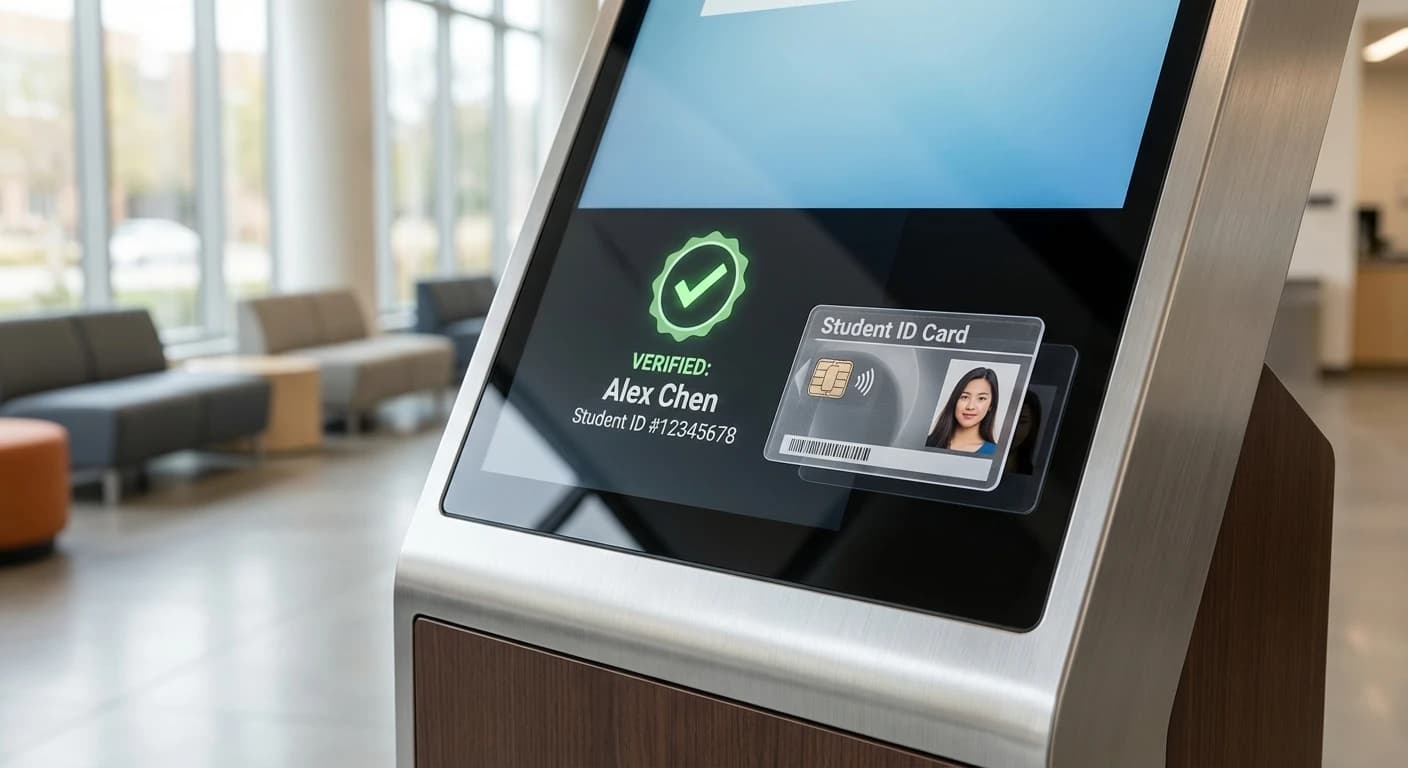
From ID Cards to Digital Credentials: How RFID Bridges Physical and Digital Campus Security
The campus ID card has come a long way from laminated photos and magnetic stripes. In 2026, educational institutions face a pivotal moment: digital credentials are reshaping how students prove their identities, skills, and achievements online, while physical security demands remain as critical as...
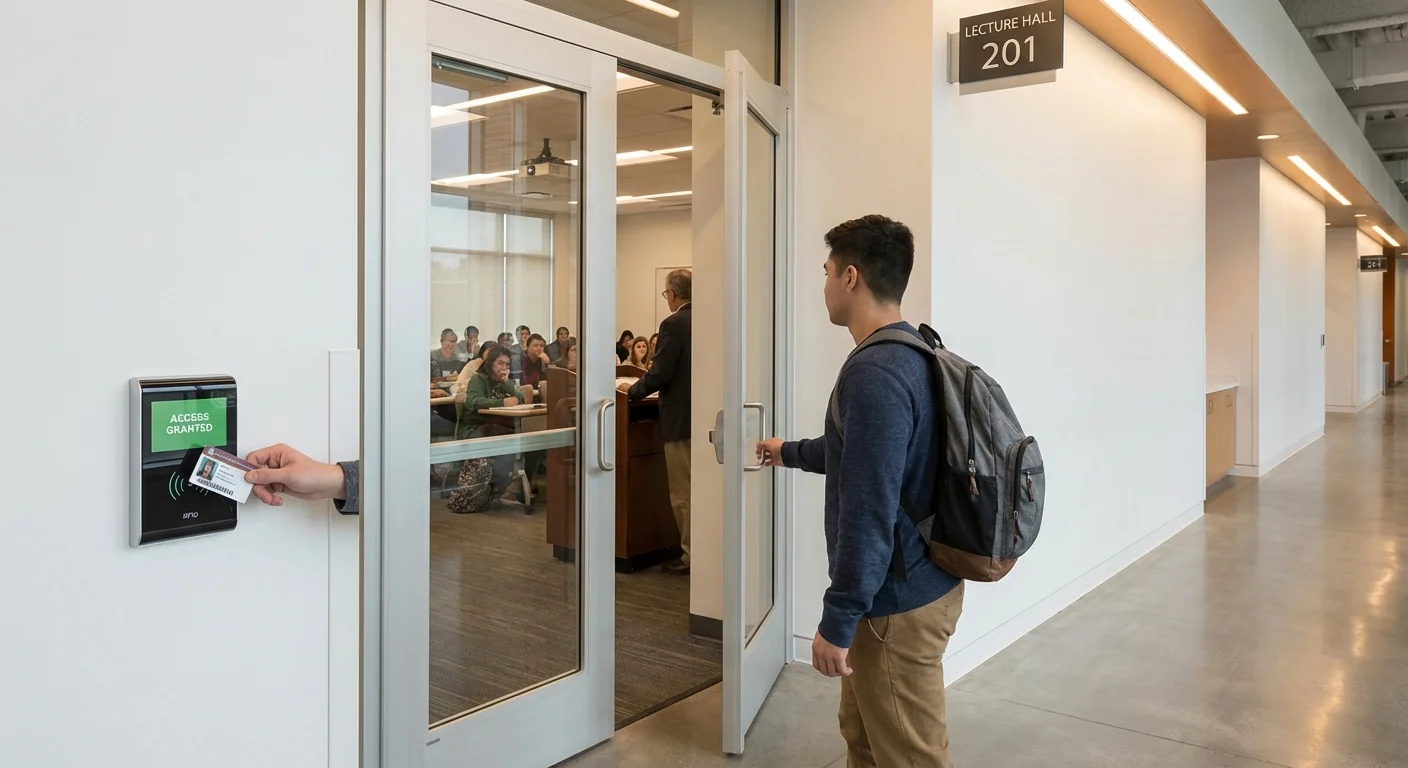
RFID Attendance Tracking for Universities: Complete Implementation Guide
RFID-based attendance tracking eliminates manual roll calls and buddy punching while giving universities real-time insight into lecture attendance patterns. This comprehensive guide covers the technology, integration with learning management systems, and GDPR considerations for European institutions.
