Unified Access Control: How Universities Are Merging RFID, Lockdowns, and Mobile Credentials
Campus security is undergoing its most significant transformation in a decade. As universities face an evolving threat landscape—from ideological violence to sophisticated cyber intrusions—security leaders are abandoning patchwork solutions in favor of unified access control platforms that bring...
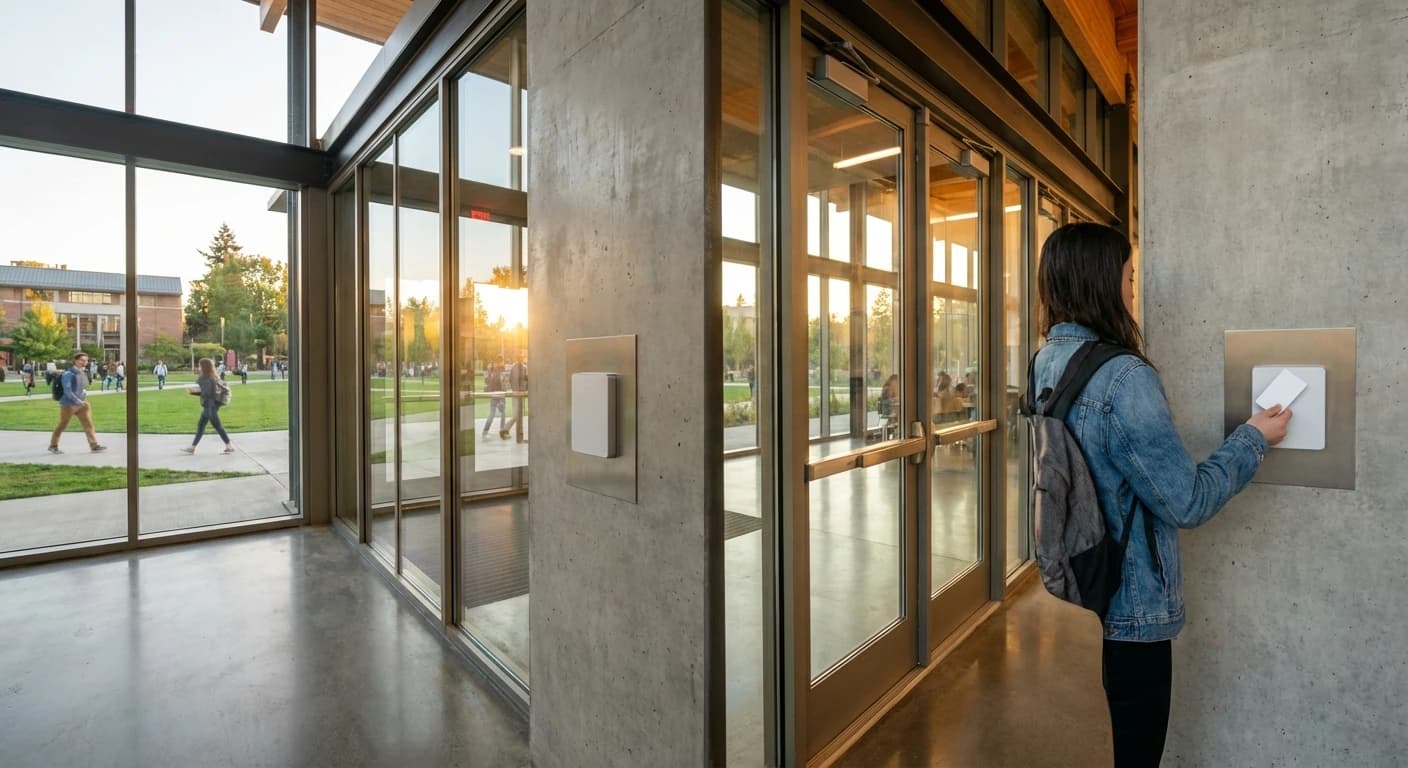
Campus security is undergoing its most significant transformation in a decade. As universities face an evolving threat landscape—from ideological violence to sophisticated cyber intrusions—security leaders are abandoning patchwork solutions in favor of unified access control platforms that bring RFID, mobile credentials, emergency lockdowns, and video surveillance under a single operational umbrella. According to a recent Campus Safety Magazine report, **67% of security leaders** and **73% of integrators** now see a decisive shift toward unified physical access control systems (PACS) across higher education campuses.
Why Fragmented Security Systems Are Failing Campuses
For years, most universities operated with a patchwork of disconnected systems—one vendor for door access, another for video surveillance, a separate platform for visitor management, and yet another for emergency notifications. The result was slow response times, communication blind spots, and critical delays during emergencies. When Florida State University experienced a campus shooting in April 2025 that killed two and wounded five, the institution invested millions in integrated panic buttons and lockdown mechanisms specifically to eliminate the delays caused by fragmented, legacy systems.
The data underscores the urgency. Research shows that locked classroom doors during active-shooter incidents result in a **60% reduction in casualties** and **79% fewer deaths**. But those doors can only be locked instantly if access control, alarm systems, and notification platforms are connected and communicating in real time. That level of coordination is impossible with standalone systems—and it is exactly what unified access control platforms now deliver.
What Unified Access Control Actually Looks Like
A unified access control platform integrates multiple security layers into a single management dashboard. For universities, this typically means combining RFID card readers, mobile credential authentication, electronic locks, video surveillance, intrusion detection, and emergency alert systems into one coordinated ecosystem. When a threat is detected, administrators can initiate a campus-wide or building-specific lockdown from a desktop or mobile device—deactivating all student credentials, locking every connected door, notifying law enforcement, and pushing alerts to every phone on campus simultaneously.
Critically, these platforms also support first-responder access. If emergency personnel carry mobile credentials on their phones, they can bypass a lockdown and enter buildings immediately to provide aid. This dual capability—locking out threats while letting responders in—represents a fundamental leap beyond what legacy RFID-only systems could achieve.
Mobile Credentials and RFID: A Layered Approach
The shift to unified systems is accelerating alongside the adoption of mobile credentials. With **97% of adults ages 18–29** owning smartphones, mobile access is a natural fit for college campuses. Students tap their phones at door readers just as they would an RFID card—but with added security layers. Mobile credentials leverage biometric authentication (Face ID or fingerprint), encrypted communication, and remote management capabilities that physical cards cannot match.
However, mobile credentials are not replacing RFID—they are complementing it. A robust campus access strategy layers both technologies. RFID cards remain essential for visitors, temporary workers, event attendees, and as backup credentials when phones are lost or dead. The unified platform manages both credential types through a single interface, ensuring that a student tapping a phone and a maintenance worker swiping an RFID badge are both authenticated, logged, and governed by the same access policies and time-based rules.
Universities such as Penn State, Notre Dame, Clemson, and George Mason are already operating within this layered model, combining mobile credentials with traditional RFID infrastructure as part of broader campus modernization efforts that also include drone-based surveillance for emergency dispatch, search-and-rescue, and real-time incident tracking.
The AI Layer: Smarter Threat Detection and Faster Audits
Artificial intelligence is emerging as the operational backbone of unified access control. AI-powered analytics can flag anomalous access patterns—a credential used in two buildings miles apart within minutes, an after-hours entry to a restricted lab, or a sudden surge of failed authentication attempts at a single reader. These signals, invisible in legacy systems, now trigger automated alerts and can initiate pre-programmed lockdown sequences before a human operator even reviews the data.
On the compliance side, automated tools are delivering measurable efficiency gains. Organizations using AI-driven compliance within unified platforms report **30% fewer misidentification incidents**, **50% faster audit completion**, and **over 20 minutes saved per staff shift** on routine credentialing and verification tasks. For university security departments stretched thin by budget constraints, these operational savings are as compelling as the safety improvements.
What Campus Security Leaders Should Do Now
The transition to unified access control is not a future aspiration—it is happening now, driven by real incidents and measurable outcomes. For universities still operating disconnected systems, the roadmap is clear. First, **audit your current infrastructure**: map every access point, identify which systems cannot communicate with each other, and document the gaps that would slow an emergency response. Second, **prioritize integration over replacement**. Many modern unified platforms are designed to work with existing RFID readers and electronic locks, reducing upfront costs. Third, **adopt a layered credential strategy** that supports both RFID cards and mobile credentials from day one, ensuring coverage for every user type on campus.
Finally, involve all stakeholders early. Campus security in 2026 is not just a facilities issue—it intersects with IT, student affairs, emergency management, and even public relations. A unified platform works best when it is governed by a unified team.
The convergence of RFID, mobile credentials, AI analytics, and emergency lockdown capabilities into a single platform is redefining what campus safety means. Universities that move now will be positioned not only to respond faster to threats but to prevent them entirely. Contact us today to learn how CampusRFID can modernize your university's access control system.
Ready to Implement RFID on Your Campus?
Contact us to learn how our RFID solutions can improve campus security and student experience.
Related Articles
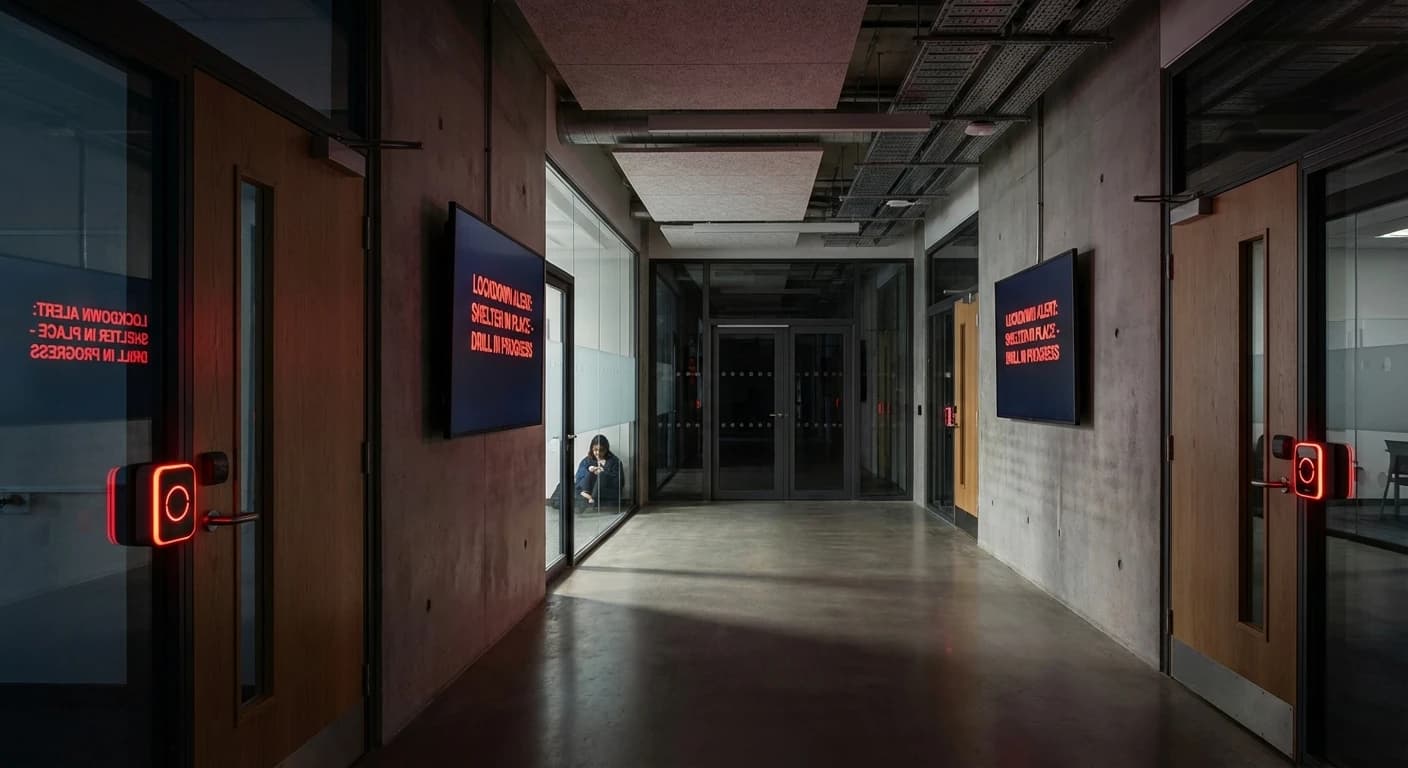
Emergency Lockdown Systems: How RFID Technology Saves Lives on Campus in 2026
When seconds count during a campus emergency, traditional lock-and-key systems become dangerous liabilities. Security officers cannot physically reach every door in time. Students fumble with manual locks while panic spreads. In 2026, universities are adopting RFID-powered emergency lockdown...

AI-Powered Access Control: How Smart RFID Systems Are Predicting Campus Threats Before They Happen
For decades, campus security operated on a simple principle: something happens, then we respond. A door propped open triggers an alarm. An unauthorized access attempt gets logged. A security incident prompts a review of footage. This reactive model served institutions adequately when threats were...