How RFID Campus Cards Are Transforming University Dining
Walk into any university dining hall during peak lunch hour and the scene is familiar: hundreds of students streaming through doors, tapping cards or phones at point-of-sale terminals, grabbing meals, and heading out — often in under 30 seconds. Behind that seamless experience is RFID technology,...
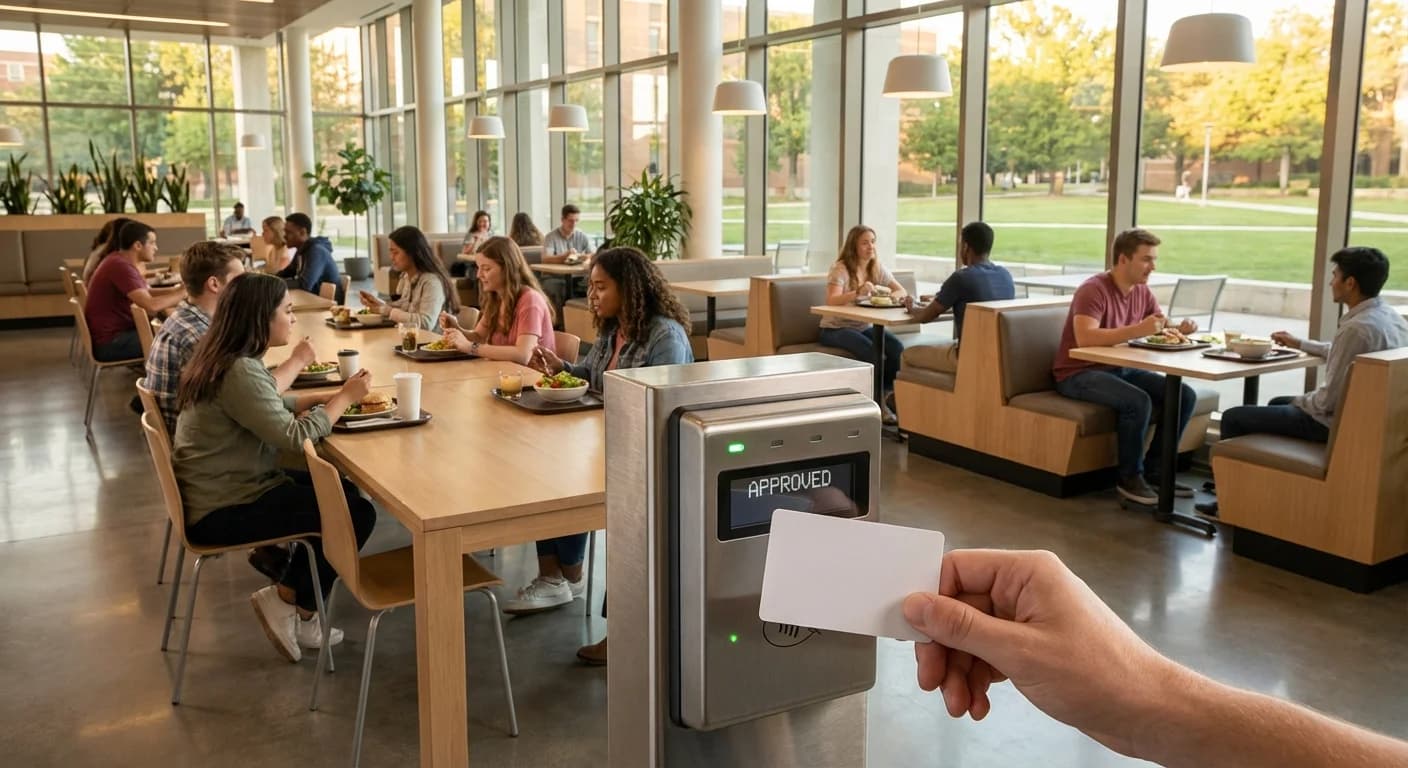
Walk into any university dining hall during peak lunch hour and the scene is familiar: hundreds of students streaming through doors, tapping cards or phones at point-of-sale terminals, grabbing meals, and heading out — often in under 30 seconds. Behind that seamless experience is RFID technology, and its role in campus dining is expanding far beyond simple meal swipes. From cashless convenience stores to AI-driven food waste tracking, RFID-enabled campus cards are quietly reshaping how colleges feed their students, manage resources, and meet ambitious sustainability goals.
The Cashless Dining Hall Is Now the Standard
The days of students fumbling for cash at the register are effectively over. RFID-embedded campus cards — and their mobile wallet counterparts on Apple Wallet and Google Wallet — have made contactless payment the default at most four-year institutions. A single tap completes a transaction in milliseconds, and the impact on throughput is measurable. Universities report significantly shorter lines during peak hours, a critical improvement when a dining hall needs to serve thousands of students within a 90-minute lunch window.
The financial infrastructure behind these taps is more sophisticated than it looks. Students link their RFID card to a pre-funded digital wallet or a campus-managed account loaded with dining dollars and meal swipes. Each tap triggers an instant verification of identity and balance, records the transaction, and deducts the appropriate amount — all without the security risks and administrative overhead of handling physical cash. For campus dining operators like Aramark and Sodexo, this digital trail also delivers granular data on purchasing patterns, popular menu items, and peak demand periods.
Sodexo's Food Hive: The Frictionless Campus Store
Perhaps the clearest signal of where campus dining is headed comes from Sodexo, which announced plans to open approximately 100 "Food Hive" convenience stores on college campuses by 2026. These modular, cashless micro-markets incorporate Mashgin's AI-powered self-checkout technology, allowing students to grab snacks, beverages, and prepared meals and pay with a tap of their campus card — no cashier required. Sodexo opened roughly 30 locations during the 2024–2025 academic year and is scaling aggressively, with each store designed to feature products from local vendors and minority- and women-owned businesses.
The Food Hive model reflects a broader shift in campus dining: moving beyond the traditional cafeteria toward distributed, always-available food access points. RFID-enabled payment makes this economically viable by eliminating staffing costs at the register while giving students 24/7 access to food — a meaningful improvement for those studying late or living on tight schedules.
RFID Tags Are Now Tracking Food Waste
The most innovative application of RFID in campus dining may be one students never notice. U.S. colleges and universities generate an estimated 3.6 million tons of food waste annually, with the average student producing around 110 pounds of edible food waste each year. That waste represents both an environmental burden and a significant financial cost to dining operations.
Virginia Commonwealth University is pioneering a solution. In partnership with its College of Engineering, VCU is developing a scanning system that uses RFID-tagged dining plates combined with machine learning and high-precision measurement tools. When plates are returned to the dish area, the system records what food remains uneaten. Over time, it identifies which menu items consistently go to waste, enabling dining managers to adjust portion sizes, modify recipes, or retire unpopular dishes. The project, led by co-principal investigator Tamer Nadeem, Ph.D., is expected to go fully operational in fall 2026, with real-time interactive dashboards displaying waste statistics to the campus community.
VCU has also launched its ReusePass program, which provides reusable to-go containers embedded with RFID tags. The tags track each container's lifecycle — how many times it has been used, when it was last sanitized, and when it needs replacement. Uneaten prepared meals from dining facilities are redirected to on-campus Ram Fridges and community refrigerators in the Richmond region, ensuring that surplus food reaches food-insecure students rather than the landfill.
One Card for Everything: Dining, Doors, and Beyond
The real power of RFID campus cards lies in unification. The same card that opens a student's dorm room at midnight buys their breakfast at 7 a.m., checks out a library book at noon, and pays for laundry at 5 p.m. This "one card" model — offered by platforms like Transact, CBORD, and TouchNet — eliminates the need for separate credentials across campus services and gives administrators a single system to manage.
For dining specifically, this integration means a student's meal plan, flex dollars, and guest meal allowances all live on one credential. Parents can reload accounts remotely. Nutritional data can be tied to dining transactions for students with dietary restrictions or allergies. And when a card is lost, a single deactivation secures every linked service simultaneously — a security advantage that fragmented systems cannot match.
The market for these unified systems is growing rapidly. The global RFID access card market is projected to reach $5.2 billion in 2026 and grow to $9.8 billion by 2033, driven in part by smart campus deployments. A Transact research study found that 70% of Gen Z students consider the availability of digital IDs an important factor when choosing a college — a statistic that is pushing even budget-constrained institutions to invest in RFID infrastructure.
What Comes Next for Campus Dining
The trajectory is clear. As RFID and NFC technology matures, campus dining will become more personalized, more efficient, and more sustainable. Predictive analytics built on RFID transaction data will help dining halls forecast demand with greater accuracy, reducing overproduction. Allergen alerts triggered by a student's card profile could warn them before they pick up a meal containing a flagged ingredient. And as reusable container programs like VCU's ReusePass scale to other institutions, RFID tracking will make campus-wide zero-waste dining goals achievable rather than aspirational.
For university administrators evaluating their dining technology, the question is no longer whether to adopt RFID-enabled systems but how quickly they can implement them. The students arriving on campus this fall already expect contactless payments, mobile credentials, and seamless dining experiences. The institutions that deliver on those expectations — while using the same technology to cut waste and improve food access — will set the standard for modern campus life.
Ready to modernize your campus dining and access systems with RFID technology? Contact our team to learn how we can help your institution build a smarter, more connected campus.
Ready to Implement RFID on Your Campus?
Contact us to learn how our RFID solutions can improve campus security and student experience.
Related Articles
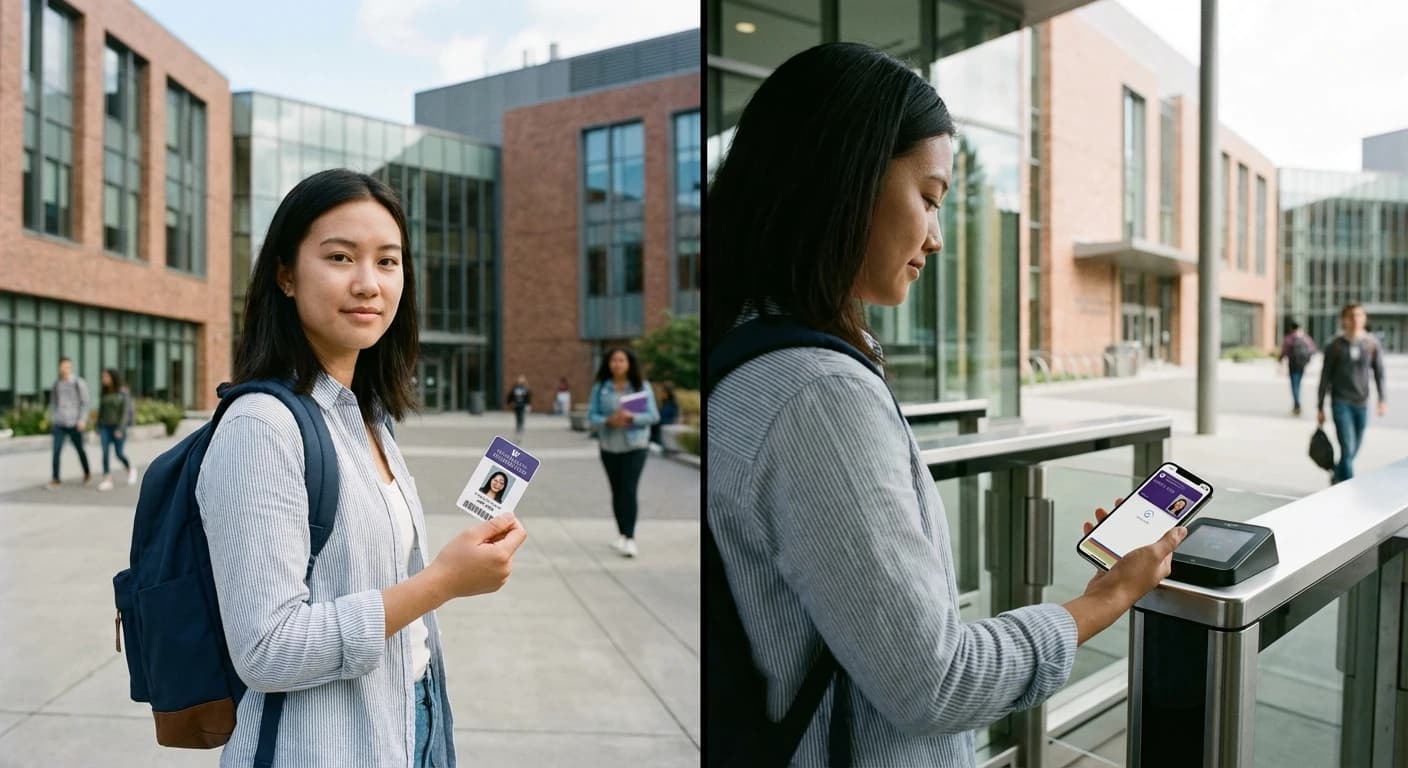
Mobile vs Physical RFID Cards: What 97% of Students Really Want from Campus Access
Campus access technology stands at a crossroads. With 97% of adults aged 18-29 now owning smartphones, the push toward mobile credentials feels inevitable. Yet the question facing university administrators isn't simply "mobile or physical" — it's understanding what actually works when 30,000...

Campus RFID Cards Revolutionizing Student Experience
Get the latest insights, market trends & inspiration!