Emergency Lockdown Systems: How RFID Technology Saves Lives on Campus in 2026
When seconds count during a campus emergency, traditional lock-and-key systems become dangerous liabilities. Security officers cannot physically reach every door in time. Students fumble with manual locks while panic spreads. In 2026, universities are adopting RFID-powered emergency lockdown...
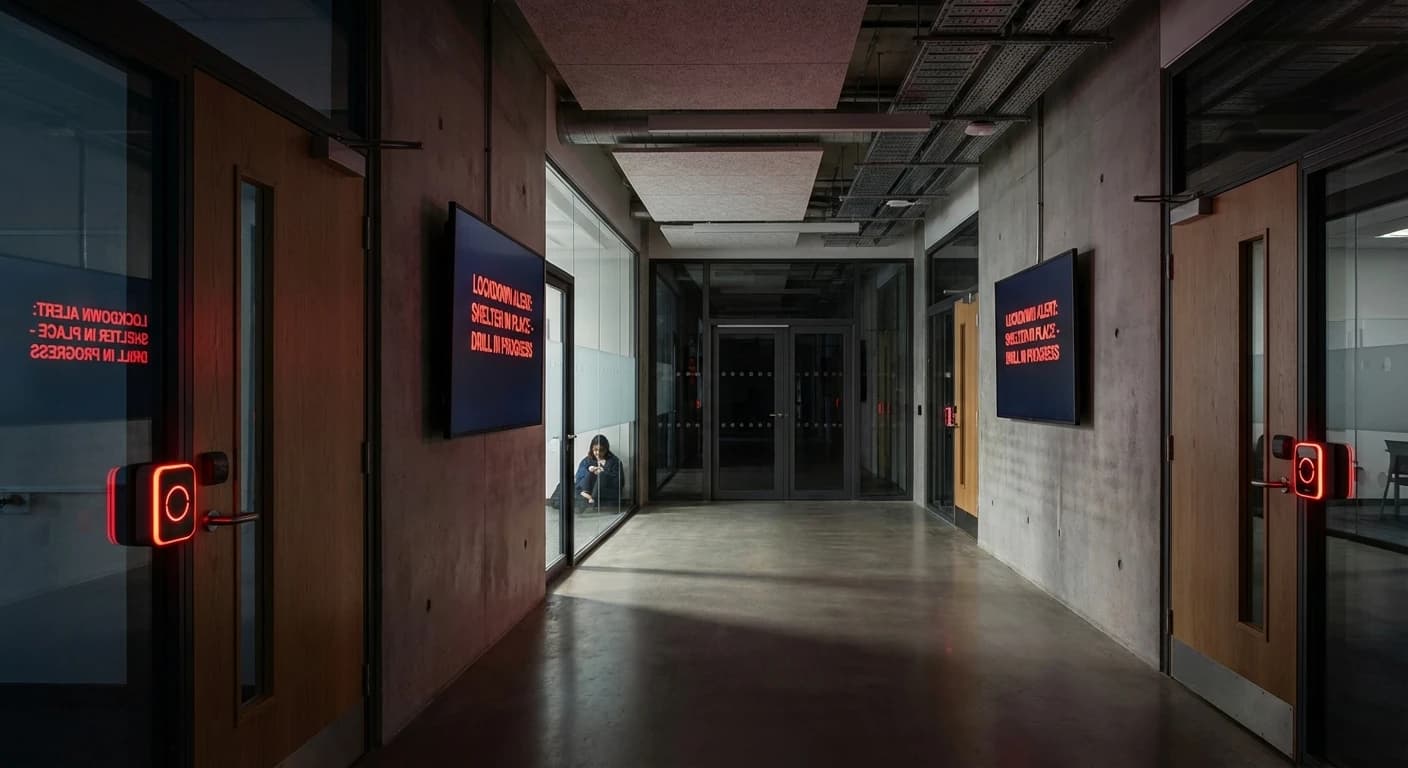
When seconds count during a campus emergency, traditional lock-and-key systems become dangerous liabilities. Security officers cannot physically reach every door in time. Students fumble with manual locks while panic spreads. In 2026, universities are adopting RFID-powered emergency lockdown systems that secure entire campuses in under three seconds—transforming how institutions protect their communities during critical incidents.
The Critical Gap in Traditional Campus Security
According to the Campus Safety Magazine 2025 Annual Report, the average response time for manually securing a university building during an emergency exceeds 4 minutes. In active threat situations, research from the FBI indicates that incidents are typically resolved within 5 minutes—often before traditional lockdown procedures can be fully implemented.
This gap represents a fundamental vulnerability. A 2025 study by the National Center for Campus Public Safety found that 67% of universities still rely on manual lock systems in at least half of their buildings. Faculty members waste precious seconds searching for keys. Classroom doors remain unlocked because instructors prioritize teaching over security protocols. The result is a patchwork of protection that fails when it matters most.
RFID-integrated lockdown systems eliminate this gap entirely. With centralized control and instant electronic activation, every door equipped with RFID readers can transition from normal operation to secure lockdown simultaneously—regardless of whether anyone is physically present to engage a lock.
How RFID Lockdown Technology Works
Modern RFID emergency systems operate on a simple but powerful principle: electronic locks connected to a central management platform can receive commands instantaneously. When security personnel activate a lockdown—whether from a command center, mobile device, or strategically placed panic buttons—the system sends signals to every connected access point.
Within 2-3 seconds, classroom doors lock automatically. Building perimeters secure. Elevators return to ground floors and disable. The same RFID readers that grant daily access to students and staff become barriers that protect them during emergencies.
Advanced systems in 2026 offer zone-based lockdowns, allowing security teams to secure specific buildings or floors while keeping other areas operational. This granularity proves essential for incidents that don't require full campus shutdown—medical emergencies, localized threats, or suspicious activity in specific locations.
Integration with existing campus infrastructure amplifies effectiveness. When lockdown activates, the system can simultaneously trigger mass notification alerts via text message, email, and digital signage. HVAC systems can switch to safe mode. Lighting can change to indicate secure status. The RFID network becomes the backbone of a comprehensive emergency response ecosystem.
Real-World Implementation Success Stories
The University of Central Florida completed a campus-wide RFID lockdown upgrade in late 2025, covering 200+ buildings and 15,000 access points. During their first full-scale drill, the system secured all academic buildings in 2.8 seconds—compared to their previous manual protocol time of 6 minutes and 40 seconds.
Community colleges have proven early adopters of this technology. Maricopa Community College District in Arizona reports that their RFID lockdown system, implemented across 10 campuses, has been activated for legitimate security concerns 23 times since installation. In each instance, full lockdown was achieved before the first law enforcement unit arrived on scene.
Cost considerations initially slowed adoption, but 2026 pricing has changed the equation. The average per-door cost for RFID lockdown capability has dropped 40% since 2023, according to Security Industry Association data. Federal grants through the STOP School Violence Act now explicitly cover electronic access control upgrades, making implementation financially accessible for institutions of all sizes.
Beyond Lockdown: The Complete Safety Ecosystem
Emergency lockdown represents just one capability within modern RFID security platforms. The same infrastructure enables mustering and accountability—tracking which cardholders are inside buildings during emergencies and providing first responders with accurate occupancy data.
After lockdown, controlled release becomes equally important. RFID systems allow security teams to unlock specific doors for law enforcement entry while maintaining secure status elsewhere. Evacuation can be managed systematically, with access logs providing documentation of who exited through which points and when.
Post-incident analysis benefits significantly from RFID data. Every card tap generates a timestamp and location record. Security teams can reconstruct movements, identify anomalies, and improve protocols based on actual behavior patterns rather than assumptions.
Integration with video surveillance multiplies investigative capability. When RFID systems flag unusual access patterns—a card used at an unexpected time or location—video feeds can automatically highlight the corresponding footage for review.
Implementation Considerations for 2026
Universities evaluating RFID lockdown systems should prioritize several factors. Network reliability tops the list—emergency systems must function even when primary internet connections fail. Look for solutions offering cellular backup, local processing capability, and battery-powered operation for critical doors.
Fail-safe versus fail-secure configurations require careful planning. Most institutions opt for fail-safe on emergency egress routes (doors unlock during power loss for safe evacuation) while implementing fail-secure on perimeter access points (doors remain locked to prevent unauthorized entry).
Training and drill protocols deserve equal attention to technology selection. The most sophisticated system provides limited value if staff don't understand activation procedures or students don't recognize lockdown indicators. Regular drills—the Department of Homeland Security recommends quarterly exercises—build the muscle memory that saves lives during actual emergencies.
Compliance requirements continue evolving. The Clery Act mandates timely warning and emergency notification capabilities. State-level legislation in 38 states now includes specific requirements for electronic access control in educational facilities. RFID lockdown systems address these requirements while providing documentation that demonstrates compliance during audits.
Protecting Your Campus Community
Campus security has always been about protecting people. In 2026, RFID technology transforms that protection from reactive to proactive, from slow to instantaneous, from partial to comprehensive. Emergency lockdown systems represent the most significant advancement in campus safety infrastructure this decade.
The question for university administrators is no longer whether to implement RFID-based emergency systems, but how quickly they can upgrade their existing infrastructure. Every day without instant lockdown capability is a day of unnecessary risk.
**Ready to explore how RFID emergency lockdown systems can protect your campus?** Our team specializes in designing comprehensive security solutions tailored to your institution's unique requirements. Contact us today for a free consultation and campus security assessment.
Ready to Implement RFID on Your Campus?
Contact us to learn how our RFID solutions can improve campus security and student experience.
Related Articles

Unified Access Control: How Universities Are Merging RFID, Lockdowns, and Mobile Credentials
Campus security is undergoing its most significant transformation in a decade. As universities face an evolving threat landscape—from ideological violence to sophisticated cyber intrusions—security leaders are abandoning patchwork solutions in favor of unified access control platforms that bring...

AI-Powered Access Control: How Smart RFID Systems Are Predicting Campus Threats Before They Happen
For decades, campus security operated on a simple principle: something happens, then we respond. A door propped open triggers an alarm. An unauthorized access attempt gets logged. A security incident prompts a review of footage. This reactive model served institutions adequately when threats were...